Анализ: Особые и стратегические отношения - (2) Азербайджан и Турция: Одна нация, два государства, отдельные чековые книжки
Особые и стратегические отношения (2)

Отношения между Турцией и Азербайджаном часто описываются как "стратегические". Чаще всего это было похоже на удобство, но в последнее время сотрудничество стало более равным и сплоченным.


Пожалуй это было стечением обстоятельств, а может быть и нет, но в то время, как президента Армении Серж Саргсян чествовали в Москве во время государственного визита в Россию на этой неделе, Президент Ильхам Алиев Азербайджана отправился в Измир для участия в первом заседании Совета стратегического сотрудничества высокого уровня Турция - Азербайджан, которое договорились создать в начале этого года.

"Стратегический" это слово часто используется для описания турецко-азербайджанских отношений. Глубокие исторические, культурные, языковые и религиозные сходства между двумя странами часто подчеркиваются политиками с обеих сторон. Бывший президент Азербайджана Эльчибей очень верил в пантуранизм, и его преемник президент Гейдар Алиев ввел термин «Одна нация, два государства", чтобы описать эти отношения. У обоих были ожидания от отношений с Турцией, которые не свершились. Эльчибей, романтик, был разочарован. Гейдар Алиев, прагматик, понимал ограниченность отношений и работал в их пределах.

Последние два десятилетия отношения больше походили на взаимное удобство. Турции выгоден доступ к азербайджанскому рынку. Она может рассчитывать на Азербайджан в поддержке по таким вопросам, как Кипр. Азербайджан же получил некоторые турецкие инвестиции, в результате использования Турции в качестве транзитного маршрута для энергетических ресурсов на их пути к мировым рынкам, и умеренную военную поддержку и неопределенные обещания гарантий защиты. Турция также дала Азербайджану моральную и дипломатическую поддержку в ее противостоянии с Арменией вокруг Нагорного Карабаха, в том числе, закрыв свою сухопутную границу с Арменией.

Именно из-за этого вопроса два года назад отношения между Азербайджаном и Турцией подверглись самым большим испытаниям. Когда в 2009 г. Турция, подстрекаемая всем международным сообществом, перешла в стадию нормализации отношений с Арменией, в том числе путем установления дипломатических отношений и открытием сухопутной границы, Азербайджан отреагировал резко.Турецкое правительство было удивлено и озадачено реакцией, и к всеобщему удивлению отступила от своих соглашений с Арменией.

Это был момент, когда турецко-азербайджанские отношения вступили в новый этап.

На протяжении большей части последних двух десятилетий Турция выступала в качестве покровителя Азербайджана, и отношения были далеко не равными. Азербайджан в 2011 году, однако, уже совсем другая страна нежели чем десять лет назад. Опираясь на доходы от энергетических ресурсов, он стал гораздо более уверенным в себе. Его избрание на прошлой неделе в качестве непостоянного члена Совета Безопасности ООН является законным подтверждением успеха, проводимой внешней политики. Новый Азербайджан уже не готов быть младшим партнером в отношениях с Турцией.

Однако он сам сейчас не должен совершать ошибку, не принимать во внимание изменения, которые происходят в Турции. Турция также в настоящее время чувствует себя гораздо более уверенной в себе страной нежели это было десять лет назад. Её политическая текстура резко изменилась. Она видит свою роль в качестве региональной силы, в некотором смысле даже, как глобальную силу. Эта новая Турция требует уважения со стороны своих соседей, независимо от того, являются ли они мусульманами, тюрками, европейцами или кем-либо ещё. Азербайджану придется управлять своими отношениями с Турцией очень осторожно, если он хочет сохранить слово "стратегические" элементом отношений.

Ключ к этому экономическое сотрудничество. Во многих отношениях экономики Азербайджана и Турции стали хвалебными. Азербайджан имеет природные ресурсы, избыток финансовой ликвидности и огромное количество инфраструктуры, которое необходимо построить. Турция имеет квалифицированную рабочую силу, доступ к мировым рынкам и потребность в инвестициях для своей растущей экономики. Существует много того, что можно сделать для развития экономического сотрудничества между ними, и встреча в Измире была признаком того, что эта работа уже началась.

Азербайджан серьезно начал инвестировать в турецкую экономику. В Измире на этой неделе Турция и Азербайджан также подписали 15 документов, в том числе соглашение о продаже газа в Турцию с месторождения Шах-Дениз-2 в 2017 году, и соглашение о транзите газа с месторождения Шах-Дениз-2 в Турцию в 2017-2042 через сети государственного трубопровода турецкой компании Botas. Долгожданное соглашение по газу укрепит позиции Турции в качестве энергетического узла, и оправдает строительство трубопровода Nabucco. Это проекты, из которых обе страны могут извлечь выгоду.

Теперь, Азербайджан является достаточно зрелым и богатым, чтобы получить свою чековую книжку и вполне вероятно, что ее отношения с Турцией, конечно же не без своих проблем, но будут на самом деле более плодотворными, независимо от того, называют их или нет "стратегическими".

Источник: Это вторая статья из серии об "Особых и стратегических отношениях" на Южном Кавказе и была подготовлена для commonspace.eu аналитической командой LINKS. Выраженное мнение не обязательно отражает редакционную политику сайта.Третья и последняя статья в этой серий будет опубликована в понедельник, 31 октября.

Прочитать первую сатью из этой серии "Армения в лоно Матушки-России"

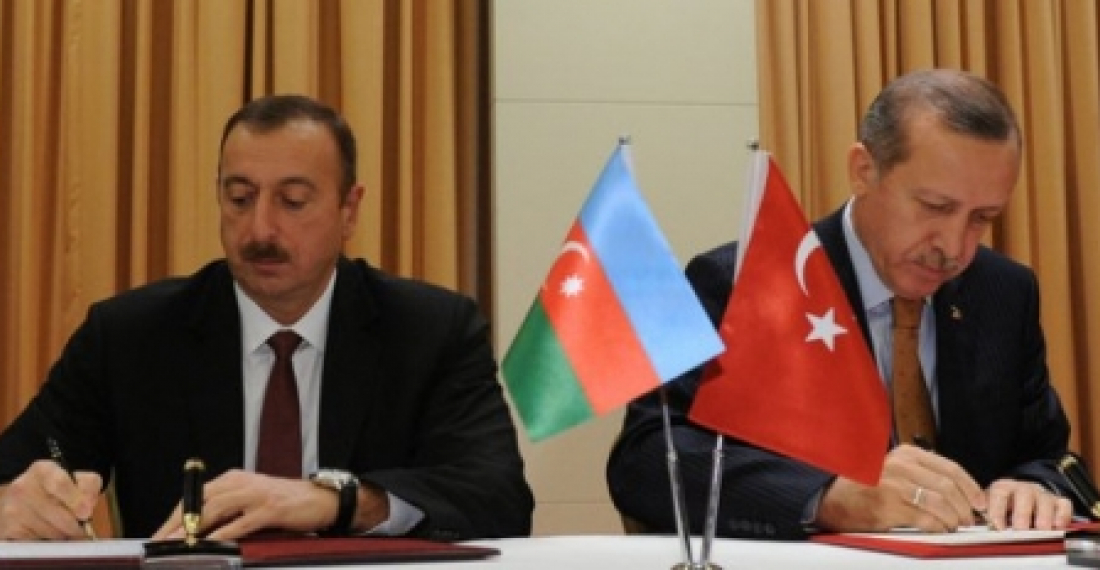
Фото: Президент Азербайджана Ильхам Алиев и премьер-министр Турции Реджеп Тайип Эрдоган на подписании двусторонних соглашений в Измире 26 октября 2011 года (фотография любезно предоставлена пресс-службой президента Азербайджана)

Related articles

Editor's choice
News
Russia adds pressure on Armenia ahead of key elections; recalls Ambassador in Yerevan for consultations

Russia adds pressure on Armenia ahead of key elections; recalls Ambassador in Yerevan for consultations

Ahead of key parliamentary elections,scheduled to be held in Armenia on Sunday, 7 June, Russia continues to attempt to put pressure on the Armenian Government led by prime minister Nikol Pashinyan. On 30 May, Russia recalled its Ambassador to Yerevan for consultations. A terse statement, published on the website of the Russian Foreign Ministry, said, "The Ambassador of the Russian Federation to the Republic of Armenia , S.P. Kopyrkin, has been summoned to Moscow for consultations in connection with the steps taken by the Armenian leadership to move closer to the European Union, which are detrimental to cooperation within the EAEU." This followed a statement issued the day before, by the leaders of the Eurasian Economic Union (EAEU) that challenges the Armenian trajectory towards approximating to the European Union. Vladimir Putin is undertood to have personally pushed the other four EAEU leaders to issue the statement, which said: "Taking into account the significant risks to the economic security of the member states of the Eurasian Economic Union (hereinafter referred to as the Union) arising in connection with the preparation of the Republic of Armenia for accession to the European Union, as well as the need to prevent the associated damage to the member states of the Union: decided that the members of the Eurasian Intergovernmental Council from the Republic of Belarus, the Republic of Kazakhstan, the Kyrgyz Republic and the Russian Federation will report at the next meeting of the Supreme Eurasian Economic Council in December 2026 on the possible consequences of the suspension of the Treaty on the Eurasian Economic Union with respect to the Republic of Armenia. We share the position on the need to hold a national referendum in the Republic of Armenia as soon as possible on joining the European Union or continuing to be part of the Eurasian Economic Union."
Editor's choice
News
The leaders of the states of the Eurasian Economic Union issued a tough statement warning fellow-member state Armenia of the consequences of its desire to join the European Union.

The leaders of the states of the Eurasian Economic Union issued a tough statement warning fellow-member state Armenia of the consequences of its desire to join the European Union.

The leaders of the states of the Eurasian Economic Union (EEAS) issued a tough statement warning fellow-member state Armenia of the consequences of its desire to join the European Union. The stark, sharply worded,  warning, comes days before crucial parliamentary elections in Armenia, scheduled for 7 June. The full statement said, “We, the Presidents of the Republic of Belarus, the Republic of Kazakhstan, the Kyrgyz Republic and the Russian Federation, Taking into account the actions of the Republic of Armenia aimed at joining the European Union, including the approval in 2025 by the National Assembly of the Republic of Armenia and the signing by the President of the Republic of Armenia of the Law of the Republic of Armenia "On the Start of the Process of Accession of the Republic of Armenia to the European Union", as well as the confirmation by the European Union of the European aspirations of the Government of the Republic of Armenia, expressed in the joint declaration following the first Armenia-European Union summit, adopted on 5 May 2026, Taking into account the significant risks to the economic security of the member states of the Eurasian Economic Union (hereinafter referred to as the Union) arising in connection with the preparation of the Republic of Armenia for accession to the European Union, as well as the need to prevent the associated damage to the member states of the Union: decided that the members of the Eurasian Intergovernmental Council from the Republic of Belarus, the Republic of Kazakhstan, the Kyrgyz Republic and the Russian Federation will report at the next meeting of the Supreme Eurasian Economic Council in December 2026 on the possible consequences of the suspension of the Treaty on the Eurasian Economic Union with respect to the Republic of Armenia. We share the position on the need to hold a national referendum in the Republic of Armenia as soon as possible on joining the European Union or continuing to be part of the Eurasian Economic Union. Astana, May 29, 2026” A meeting of the Supreme Eurasian Economic Council was held in Astana, Kazakhstan, on May 29, 2026. The meeting of the Supreme Eurasian Economic Council in a restricted format was attended by Russian President Vladimir Putin, Belarusian President Alexander Lukashenko , Kazakh President Kassym-Jomart Tokayev , Kyrgyz President Sadyr Japarov , Armenian Deputy Prime Minister Mher Grigoryan, and Chairman of the Board of the Eurasian Economic Commission Bakytzhan Sagintayev. From the Russian side, the meeting was also attended by Deputy Prime Minister and member of the Council of the Eurasian Economic Commission Alexey Overchuk and Presidential Aide Yury Ushakov . The heads of delegations from EAEU observer states, including President of Uzbekistan Shavkat Mirziyoyev , Vice President of Cuba Salvador Valdés Mesa, Minister of Industry, Mines, and Trade of Iran Mohammad Atabak, and CIS Secretary General Sergei Lebedev, joined the expanded meeting . Following the meeting of the Supreme Eurasian Economic Council, a number of documents were signed .

Popular

Editor's choice
Interview
Thursday Interview: Murad Muradov

Thursday Interview: Murad Muradov

Today, commonspace.eu starts a new regular weekly series. THURSDAY INTERVIEW, conducted by Lauri Nikulainen, will host  persons who are thinkers, opinion shapers, and implementors in their countries and spheres. We start the series with an interview with Murad Muradov, a leading person in Azerbaijan's think tank community. He is also the first co-chair of the Action Committee for a new Armenian-Azerbaijani Dialogue. Last September he made history by being the first Azerbaijani civil society activist to visit Armenia after the 44 day war, and the start of the peace process. Speaking about this visit Murad Muradov said: "My experience was largely positive. My negative expectations luckily didn’t play out. The discussions were respectful, the panel format bringing together experts from Armenia, Azerbaijan, and Turkey was particularly valuable during the NATO Rose-Roth Seminar in Yerevan, and media coverage, while varied in tone, remained largely constructive. Some media outlets though attempted to represent me as more of a government mouthpiece than an independent expert, which was totally misleading.  Overall, I see these initiatives as important steps in rebuilding trust and normalising professional engagement. The fact that soon a larger Azerbaijani civil society visits to Armenia followed, reinforces the sense that this process is moving in the right direction." (click the image to read the interview in full)