


Анализ: Особые и стратегические отношения - (1) Армения в лоно Матушки-России

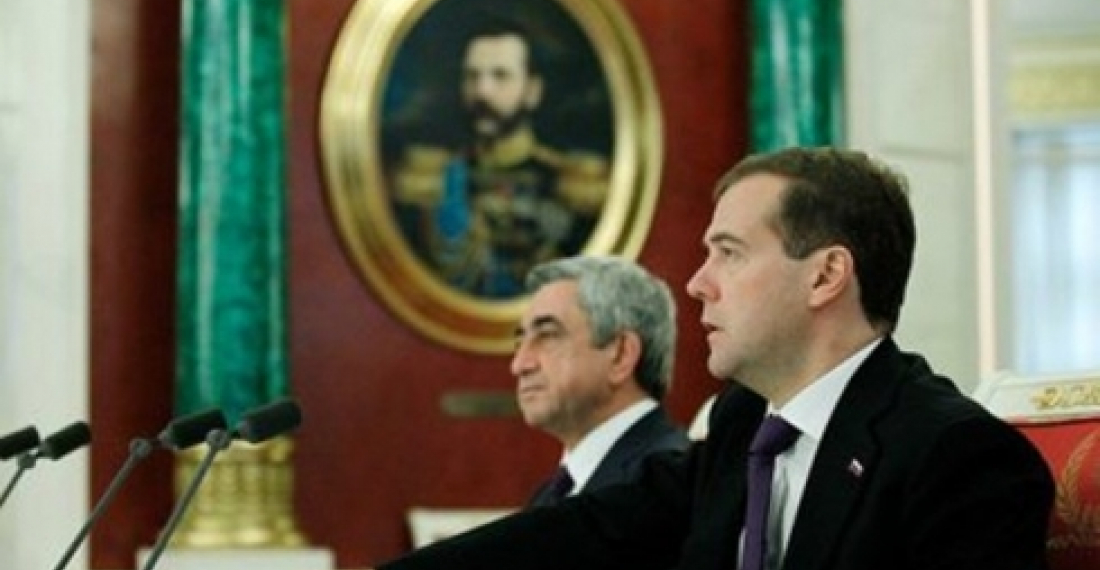
Хотя президент Серж Саргсян неоднократно бывал в Москве, как в качестве президента так и раньше, на этой неделе он совершал там свой ​​первый государственный визит. Мероприятие должно было символизировать особый характер отношений между Арменией и Россией, отношения между которыми были близкими во все времена, и которые стали еще ближе под руководством президента Саргсяна.

Президент рассказал студентам МГУ, что отношения между двумя их странами выходят за рамки добрососедских. Президент России Дмитрий Медведев также говорил о "большом альянсе" между двумя странами, и такой визит предлагает хорошую возможность для подписания ряда соглашений по широкому кругу вопросов.


Укрепление и развитие этих отношений были краеугольным камнем во внешней политике президента Саргсяна, и его министра иностранных дел Эдварда Налбандяна, в течение последних трех лет. Хотя инициатива возобновить отношения с Турцией - инициатива, которая остается замороженной во многом не по вине Армении - была также важной целью, которая никогда не должна была стать заменой особых отношений с Россией, ни даже противовес им. Это было просто выражением "реальной политики", которую сама Россия поддерживает.


В основе особых отношений между Арменией и Россией лежит обеспечение безопасности Армении. Как бы вы не посмотрели на отношения все всегда сводится к вопросу о гарантиях России безопасности Армении. Продолжающееся присутствие большой российской военной базы в Армении по соглашению, которое недавно было продлено до середины этого столетия является оправданным через эту призму. Масштабы этих гарантий безопасности не совсем понятны, но все армяне считают, что они есть, и русские никогда ничего не говорили об обратном.


Это делает особые отношения с Россией популярной политикой в Армении. Все три президента с момента обретения независимости напряженно работали, над развитием отношении и больше всех их них Серж Саргсян.


В последние годы Россия стала основным гарантом экономической безопасности Армении, во время того, когда страна боролась с глобальным экономическим спадом. Россия оказывает непосредственную, значительную финансовую поддержку но, возможно, более важным является то, что она продолжает быть источником инвестиций в Армению. Это также поддержка рынка труда Армении и денежные переводы от постоянных и сезонных рабочих в России, которые являются важным источником поступлений иностранной валюты для армянской экономики.


Поэтому эти отношения являются особыми, но вряд ли равными. Но в таком случае и отношения между Соединенными Штатами и Израилем не являются равными.


Есть две проблемы в особых отношениях между Арменией и Россией. Во-первых, президент Медведев, по-видимому отражает противоречивую позицию государства, с 2008 года пытался изменить эти отношения и превратить их в "тройку" - третья сторона Азербайджан. Пока ему этого не удалось. Если ему удастся это будет большая победа для внешней политики России, но такая перспектива беспокоит некоторых армян, которые боятся быть "распроданными". Большое количество визитов руководства Армении в Москву, в том числе пышность недавнего государственного визита призваны успокоить Ереван.


Вторая проблема состоит в собственном желании Армении иметь хорошие отношения с другими международными партнерами, помимо России. Здесь Ереван прокладывает путь осторожно. Речь идет о взаимоотношениях с Европейским Союзом - это отношения, в которых Армения нуждается и из которых она может извлечь ощутимую выгоду. На техническом уровне эта связь развивается в позитивном ключе. Пока никто не назвал их (отношения) особенными или стратегическими, но и в Ереване и и Брюсселе согласны в том, что они полезны. России самой надо всё ещё решить - рассматривать Европейский Союз в качестве партнера или конкурента. Когда она подходит к постсоветскому пространству через инстинкт, а не логикой, то ЕС скорее рассматривается как конкурент. Руководство Армении осознает это, поэтому на данный момент "полезные" отношения играют вторую скрипку "особым отношениям".


Источник: Данная статья является первой из серии статей об "Особых и стратегических отношениях" на Южном Кавказе, и была подготовлена для commonspace.eu аналитической командой LINKS. Выраженное мнение не обязательно отражает редакционную политику сайта. Вторая статья под названием "Турция и Азербайджан: Одна нация, два государства, отдельные чековые книжки" будет опубликована в пятницу, 28 октября.

Фото: Президент Саргсян и президент Медведев в Кремле (фото любезно предоставлено Пресс-службой Президента России)
Related articles

Editor's choice
News
Germany accuses Russia of cyberattacks and disinformation campaign

Germany accuses Russia of cyberattacks and disinformation campaign

The German government holds Russia responsible for a cyberattack on German air traffic control, and for targeted disinformation campaigns before the last federal election. According to the German Foreign Office in Berlin, the incidents could be clearly attributed to the Russian military intelligence service, the GRU. In response, the Russian ambassador to Berlin was summoned to the Foreign Ministry. "We have been observing a massive increase in threatening hybrid activities by Russia for some time now," a spokesperson for the Foreign Ministry stated. These range from disinformation campaigns and espionage to cyberattacks and sabotage attempts. The aim is to divide society, sow distrust, and undermine confidence in democratic institutions. The spokesperson added that with these actions, Russia is "very concretely threatening our security, not only through its war of aggression against Ukraine, but also here in Germany."  The Foreign Ministry spokesperson explained that the cyberattack on air traffic control in August 2024 was clearly attributed to the hacker collective "APT28," known as "Fancy Bear," and to the responsibility of the Russian military intelligence service, the GRU. Furthermore, it could now be "conclusively stated" that Russia had attempted "to influence and destabilize both the last Federal election and the ongoing internal affairs of the Federal Republic of Germany." There was "absolutely irrefutable evidence" for this". The so-called "Storm 1516" campaign, which has been running since 2024, is allegedly backed by "reliable information" that the Moscow-based think tank "Center for Geopolitical Expertise" is behind it. The Center is also said to be supported by Russian military intelligence. Its primary aim is to influence democratic elections in the West. (Click the image to read more).
Editor's choice
News
NATO Chief says war is on Europe's doorstep, and warns against complacency

NATO Chief says war is on Europe's doorstep, and warns against complacency

Russia could attack a NATO country within the next five years, the Secretary General of NATO, Mark Rutte, said in a stark new warning. "NATO's own defences can hold for now," Rutte warned in Berlin, but conflict was "next door" to Europe, and he feared "too many are quietly complacent, and too many don't feel the urgency, too many believe that time is on our side. "Russia is already escalating its covert campaign against our societies," Rutte said in a speech in Germany. "We must be prepared for the scale of war our grandparents or great-grandparents endured." Earlier this month, Russia's President Vladimir Putin said his country was not planning to go to war with Europe, but it was ready "right now" if Europe wanted to - or started a war. But similar reassurances were given by Moscow in 2022, just before 200,000 Russian troops crossed the border and invaded Ukraine. Putin has accused European countries of hindering US efforts to bring peace in Ukraine - a reference to the role Ukraine's European allies have recently played in trying to change a US peace plan to end the war, whose initial draft was seen as favouring Russia. But Putin was not sincere, Nato's secretary-general said in the German capital, Berlin. Supporting Ukraine, he added, was a guarantee for European security. "Just imagine if Putin got his way; Ukraine under the boot of Russian occupation, his forces pressing against a longer border with Nato, and the significantly increased risk of an armed attack against us." Russia's economy has been on a war footing for more than three years now - its factories churn out ever more supplies of drones, missiles and artillery shells. According to a recent report by the Kiel Institute for the World Economy, Russia has been producing each month around 150 tanks, 550 infantry fighting vehicles, 120 Lancet drones and more than 50 artillery pieces. The UK, and most of its Western allies, are simply not anywhere near this point. Analysts say it would take years for Western Europe's factories to come close to matching Russia's mass-production of weapons. "Allied defence spending and production must rise rapidly, our armed forces must have what they need to keep us safe," the Nato chief said.

Popular

Editor's choice
News
Germany accuses Russia of cyberattacks and disinformation campaign

Germany accuses Russia of cyberattacks and disinformation campaign

The German government holds Russia responsible for a cyberattack on German air traffic control, and for targeted disinformation campaigns before the last federal election. According to the German Foreign Office in Berlin, the incidents could be clearly attributed to the Russian military intelligence service, the GRU. In response, the Russian ambassador to Berlin was summoned to the Foreign Ministry. "We have been observing a massive increase in threatening hybrid activities by Russia for some time now," a spokesperson for the Foreign Ministry stated. These range from disinformation campaigns and espionage to cyberattacks and sabotage attempts. The aim is to divide society, sow distrust, and undermine confidence in democratic institutions. The spokesperson added that with these actions, Russia is "very concretely threatening our security, not only through its war of aggression against Ukraine, but also here in Germany."  The Foreign Ministry spokesperson explained that the cyberattack on air traffic control in August 2024 was clearly attributed to the hacker collective "APT28," known as "Fancy Bear," and to the responsibility of the Russian military intelligence service, the GRU. Furthermore, it could now be "conclusively stated" that Russia had attempted "to influence and destabilize both the last Federal election and the ongoing internal affairs of the Federal Republic of Germany." There was "absolutely irrefutable evidence" for this". The so-called "Storm 1516" campaign, which has been running since 2024, is allegedly backed by "reliable information" that the Moscow-based think tank "Center for Geopolitical Expertise" is behind it. The Center is also said to be supported by Russian military intelligence. Its primary aim is to influence democratic elections in the West. (Click the image to read more).

