


Борьба за власть в Тбилиси. Джозеф Александр Смит специально для commonspace.eu из Тбилиси анализирует сорок восемь часов политической драмы, которая потрясла правящую коалицию Грузии.

Джозеф Александр Смит специально для commonspace.eu из Тбилиси анализирует сорок восемь часов политической драмы, которая потрясла правящую коалицию Грузии.

Грузия находится в процессе продолжающегося политического кризиса после отставки министра обороны, последующей за отставкой двух ключевых министров, и раскола внутри правящей коалиции. Неожиданный поворот событий заставил партнеров Грузии ЕС и НАТО усомниться в преждней приверженности правительства страны к прозападному внешнеполитическому курсу.

Кризис начался во вторник вечером, когда премьер-министр Ираклий Гарибашвили объявил об оставке Ираклия Аласания, министра обороны Грузии, который занимал этот пост с октября 2012 года. Один бывший и четыре проходящих службу чиновника в министерстве Аласания были арестованы якобы в связи с участием в коррупционнных сделках по тендерам. Аласания, который во время их ареста находился в Германии, опротестовал их задержание незадолго до того, как были предъявлены новые обвинения против нескольких медиков армии.

Аласания осудил предъявленные обвинения, назвав их "явно политически мотивированными" и "нападением на евро-атлантический выбор Грузии." Премьер-министр ответил ему, назвав заявления министра обороны "безответственными" и оперативно отправил его в отставку.

За отставкой министра обороны вскоре последовала отставка Алекси Петриашвили, государственного министра по евроатлантической интеграции и соратника Аласания по партии "Свободные демократы". На следующий день министр иностранных дел Майя Панджикидзе, которая также приходится и невесткой Аласании, объявила о своей отставке, вместе с некоторыми ее заместителями. Министр юстиции Теа Цулукиани, которая также афилирована с либералами и, чья отставка также ожидалась, объявила, что остается на занимаемой должности.

Все заместители в Министерстве обороны были уволены, а полномочия Аласания были переданы Миндиа Джанелидзе, малоизвестному человеку, который ранее служил советником премьера по безопасности и главой контрразведки во время пребывания Гарибашвили в качестве министра внутренних дел.

После политсовета в среду, Свободные Демократы заявили, что покинут правящую коалицию "Грузинская мечта" (ГМ), которая пришла к власти 2 года назад под руководством миллиардера Бидзины Иванишвили. Уход всех десяти депутатов партии "Свободные Демократы" из коалиции означает потерю большинства в парламенте (им не будет хватать трех мест для большинства), но пока еще предстоит увидеть все ли депутаты покинут блок. 

Хотя премьер-министр вновь решительно подтвердил приверженность своего правительства к прозападному курсу во внешней политике, потеря трех министров, центральных в процессе евроатлантической интеграции, встревожил многих зарубежных партнеров Грузии.

Сам Аласания хорошо известен за рубежом, работая в качестве посла Грузии в ООН во время войны 2008 года с Россией. Согласно недавнему опросу общественного мнения, проведенного Национальным демократическим институтом, Аласания также является самым популярным политиком Грузии.

Бывший министр иностранных дел Швеции Карл Бильдт написал о "политическом кризисе в Грузии. Нападении на и об отставке министра обороны Аласания. Путь страны под угрозой." Говоря о "законной озабоченности о том, что судебная система сегодня политизирована", посол США в Грузии Ричард Норланд, отметил, что "в момент регионального хаоса и внутренних экономических проблем Грузии необходимо стабильность, единство, показательная приверженность надлежащим правовым процедурам и верховенству закона, а также доверие населения к демократическим институтам". Тем не менее, посланник НАТО на Кавказ, Джеймс Аппатурай, был более осторожен в своих комментариях, повторяя слова премьер-министра Грузии, который заявил, "что эти события не отвлекут Грузию от ее евроатлантического пути", который, по его мнению "отражает волю грузинского народа."

В комментарии по грузинскому телевидению вскоре после его отставки, Аласания явно связал его отставку и выбор внешней политики Грузии. Он также ссылался на недавние комментарии президента Георгия Маргвелашвили о том, что Грузия должна быть под властью "сильных институтов, а не управляться из-за кулис", подразумевая, что поручение пришло от основателя "ГМ" Бидзины Иванишвили, который, как многие считают, все еще оказывает сильное влияние на премьер-министра Гарибашвили.

Аласания также предположил, что его отставка служит интересам России, которые продвигает определенная «группа» в правительстве, но он отказался назвать их по именам. В то время как точность слов Аласания еще предстоит доказать, политическая нестабильность и вероятность досрочных парламентских выборов, которые запланированы на 2016 год, все это создает место на политической арене для более консервативных оппозиционных партий, которые скептически относятся к амбициям Грузии по отношению к ЕС и НАТО и открыты для более тесных отношений с Россией.

Источник: Джозеф Александр Смит из Тбилиси специально для commonspace.eu

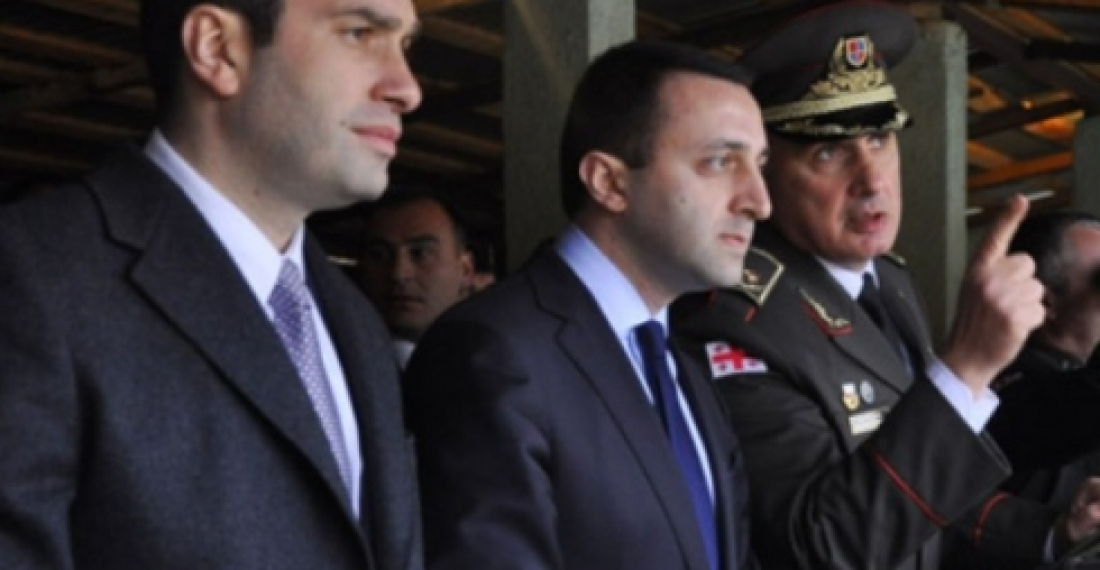
фото: Ираклий Аласания и Ираклий Гарибашвили на военных учениях специальных сил Грузии, ноябрь 2013 года (Фото любезно предоставлено civil.ge)

Related articles

Editor's choice
News
COP 17 in Armenia

COP 17 in Armenia

Armenia is currently hosting the COP17 conference of the Convention on Biological Diversity, which began earlier this week (19 October) and will run until 30 October, bringing around 15,000 participants from 196 different countries to Yerevan. At a leaders' summit held as part of COP17, Prime Minister Nikol Pashinyan expressed realistic ambitions: “We are halfway towards achieving these goals (Kunming-Montreal Global Biodiversity Framework), and we must honestly acknowledge that we are not yet moving in the right direction. Our task now is not to make new promises, but to fulfil the commitments we have already made.” Pashinyan pointed towards Armenia's own records, noting that the whitefish stock in Lake Sevan has increased substantially in the last ten years. Iranian President Masoud Pezeshkian and Georgian Prime Minister Irakli Kobakhidze also addressed the summit, with Turkiye sending its agriculture minister. However, there were no reports of Azerbaijani representatives attending. The conference has given Yerevan a valuable international platform, yet the absence of Azerbaijan is likely to be read as a sign that the peace process in the South Caucasus has not yet been translated into wider regional cooperation. The leaders' summit was opened by Armenian Prime Minister Nikol Pashinyan, who stressed that hosting the conference was a great honour for Armenia. He expressed hope that it would 'be productive and contribute to protecting our planet's biodiversity'. 'We – the citizens of Armenia, the government, state authorities and local governments – owe a debt to our nature,' the prime minister said. He noted that the international community had already developed the concept of 'living in harmony with nature’ and adopted the Kunming-Montreal Global Biodiversity Framework in 2022, setting out goals and specific targets to be achieved by 2030. 'We are halfway towards achieving these goals, and we must honestly acknowledge that we are not yet moving in the right direction. Our task now is not to make new promises, but to fulfil the commitments we have already made,' Nikol Pashinyan said. The COP17 conference is expected to adopt a declaration at leaders' level. More than 30 documents are scheduled for discussion. If approved, the commitments set out in them will become legally binding on countries that are parties to the Convention on Biological Diversity.”
Editor's choice
News
Landmines present to the European Union both a contradiction and a dilemma

Landmines present to the European Union both a contradiction and a dilemma

Finland’s decision to buy one million landmines creates a serious contradiction in the policy of the European Union, and is symbolic of a bigger dilemma facing European countries as they get used to the need to acquire “hard” power to face an increasing threat from Russia. Finland is seeking to acquire one million anti-personnel mines at a cost of 100 million euros. Finland, together with Poland, Latvia, Lithuania and Estonia last year abandoned the Ottawa agreement, the international framework that bans the use of anti-personnel mines, which the EU had been instrumental in establishing and supporting. All five countries cite the threat from Moscow as the reason. Colonel Riku Mikkonen of the Army Command told Finland’s national news agency STT that officials are now gathering information from suppliers regarding the deal, the AFP news agency reports. Helsinki would like domestic manufacturers to supply the mines, with contracts signed by the end of 2027 and production up and running by 2028. “It would be useful in many ways if Finnish companies produced the anti-personnel mines in Finland,” Mikkonen said. About half a dozen Finnish firms qualify, he told STT. “However, at this stage, buying the mines from abroad is not totally ruled out,” he added. LANDMINES PROVIDE THE EU WITH BOTH A CONTRADICTION, AND A DILEMMA Eliminating landmine contamination worldwide is one of the EU’s main soft power postures, and it basks in its record as the biggest funder of anti-landmine action in the world. But the fact that 5 of its 27 member states  have now left the Ottawa Treaty dents the EU moral high ground. It is a contradiction that is too big and important to be ignored. It also presents the European Union with a deeper dilemma. The threat from Russia is changing what the EU has stood for decades, namely a force for good able to mobilise its considerable soft power for the greater good of humanity. How the Union will implement this change will define its future. In the meantime landmines have not become any less lethal, benign, or unimportant. They remain in many parts of the world a major threat to life, an impediment to prosperity, and a potential trigger to further conflict. The 22 EU members states that still adhere to the Ottawa treaty must regroup, and be more assertive in their quest against anti-personnel land mines. All the reasons why they supported the Ottawa treaty in the first place still exist. The message must be clear: NO TO LANDMINES!

Popular

Editor's choice
Interview
Thursday Interview: Murad Muradov

Thursday Interview: Murad Muradov

Today, commonspace.eu starts a new regular weekly series. THURSDAY INTERVIEW, conducted by Lauri Nikulainen, will host  persons who are thinkers, opinion shapers, and implementors in their countries and spheres. We start the series with an interview with Murad Muradov, a leading person in Azerbaijan's think tank community. He is also the first co-chair of the Action Committee for a new Armenian-Azerbaijani Dialogue. Last September he made history by being the first Azerbaijani civil society activist to visit Armenia after the 44 day war, and the start of the peace process. Speaking about this visit Murad Muradov said: "My experience was largely positive. My negative expectations luckily didn’t play out. The discussions were respectful, the panel format bringing together experts from Armenia, Azerbaijan, and Turkey was particularly valuable during the NATO Rose-Roth Seminar in Yerevan, and media coverage, while varied in tone, remained largely constructive. Some media outlets though attempted to represent me as more of a government mouthpiece than an independent expert, which was totally misleading.  Overall, I see these initiatives as important steps in rebuilding trust and normalising professional engagement. The fact that soon a larger Azerbaijani civil society visits to Armenia followed, reinforces the sense that this process is moving in the right direction." (click the image to read the interview in full)

