Бомба замедленного действия, угрожающая Кавказу

Этот комментарий подготовлен редакцией commonspace.eu

В то время как ответственность за разрешение карабахского конфликта ложится прежде всего на правительства Армении и Азербайджана, международному сообществу необходимо уделять приоритетное внимание усилиям, направленным на мирное урегулирование конфликта, прежде чем он станет еще более угрожающим.

В мире, охваченном суматохой, с продолжающимися конфликтами в Сирии, Ливии и Йемене, ежедневно уносящие жизни сотен людей, и потенциальной угрозой военных действий на Корейском полуострове, карабахский конфликт может показаться, с точки зрения мировых канцелярий, скорее как нечто незначительное, нежели чем серьезная угроза миру во всем мире. Видимость режима прекращения огня, даже если слышно о частых его нарушениях, а также тот факт, что обе стороны конфликта принимают участие в процессе переговоров, помогли укрепить впечатление о том, что проблема сдерживается, и есть даже те, кто предполагает, что со временем все само собой разрешится, и если попытаться ускорить этот процесс, то можно столкнуться с неприятными последствиями.

Факты говорят против такой логики. Ситуация в зоне нагорно-карабахского конфликта ухудшается - из года в год, из недели в неделю - уже в течение некоторого времени. Нарушения прекращения огня теперь происходят ежедневно, в результате чего есть жертвы, хоть пока еще и не ежедневно, но жертвы регистрируются, по крайней мере, каждую неделю.

Это видимая часть еще более тревожной реальности.

И Армения, и Азербайджан сейчас активно готовятся к войне. Их приверженность этим усилиям остается абсолютной и сильно сказывается на их финансах и в более широком смысле на их обществах. Теперь обе стороны вооружены до зубов современным оружием, благодаря России и одной-двум другим недобросовестным странам-поставщикам оружия. Определенный фатализм, что война теперь уже неизбежна, царит как внутри, и среди лиц, принимающих решения, так и в более широком масштабе, в их обществах.

До недавнего времени гонке вооружений и призыв к войне, который она провоцирует, в какой-то мере противостояли активные мирные усилия, которые, хотя и не вызревали в надлежащий мирный процесс, по крайней мере, давали некоторую надежду, а на мгновение даже выглядели так, как будто такая деятельность давала результат. Эти мирные усилия - сфера деятельности стран-сопредседателей Минского процесса ОБСЕ, Франции, России и США, в настоящее время застопорились. Их посланцы должны прибыть в регион в следующем месяце, и они надеются, что смогут оживить переговоры, но никто не осмеливается предположить, как это может произойти, и настроение не способствует прорыву. 18 мая дипломатические представители стран-сопредседателей были обязаны выступить с заявлением, в котором они предупредили, что события, которые произошли за несколько дней до этого, «представляют собой значительные нарушения прекращения огня и вызывают тревогу».

И армянское, и азербайджанское руководство тщательно взвешивают варианты, лежащие перед ними, и на данный момент ни одна из сторон не исключает ничего. Это предполагает также и мир на разумных условиях, но, учитывая, что им не удается достичь его в течение долгого времени, обе стороны охватило опасное чувство цинизма. Международному сообществу необходимо предпринять гораздо более решительные и гораздо более творческие усилия, чем мы видели до сих пор, чтобы избавить стороны от этого цинизма и вернуть их к конструктивному обсуждению за столом переговоров. Концепция о том, что стороны должны найти политическую волю для ведения серьезных переговоров, вооружившись готовностью к компромиссу, ее повторяли так много раз, что она стало чем-то вроде клише. Такова реальность, которую никто не может отрицать. Но это только часть истории. Другие должны внести свой вклад, и для международной дипломатии это прямо означает, что решение карабахского конфликта должно быть приоритетным. Ясно, что на данный момент это не так.

Тем временем карабахская бомба продолжает тикать, а вместе с ней пробивает себе дорогу и призрак, который возобновит насилие, в скором времени уничтожив все важные достижения Южного Кавказа последних двух с половиной десятилетий.

Этот комментарий был подготовлен редакцией commonspace.eu

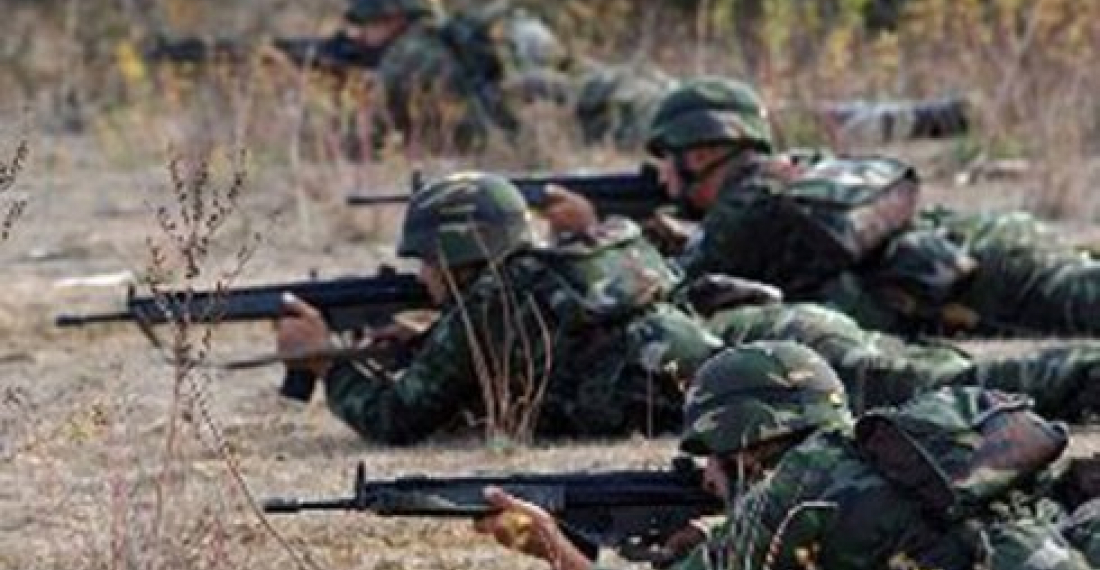
Фото: Солдаты рядом с линией соприкосновения в Карабахе (фото из архива)

Related articles

Editor's choice
News
COP 17 in Armenia

COP 17 in Armenia

Armenia is currently hosting the COP17 conference of the Convention on Biological Diversity, which began earlier this week (19 October) and will run until 30 October, bringing around 15,000 participants from 196 different countries to Yerevan. At a leaders' summit held as part of COP17, Prime Minister Nikol Pashinyan expressed realistic ambitions: “We are halfway towards achieving these goals (Kunming-Montreal Global Biodiversity Framework), and we must honestly acknowledge that we are not yet moving in the right direction. Our task now is not to make new promises, but to fulfil the commitments we have already made.” Pashinyan pointed towards Armenia's own records, noting that the whitefish stock in Lake Sevan has increased substantially in the last ten years. Iranian President Masoud Pezeshkian and Georgian Prime Minister Irakli Kobakhidze also addressed the summit, with Turkiye sending its agriculture minister. However, there were no reports of Azerbaijani representatives attending. The conference has given Yerevan a valuable international platform, yet the absence of Azerbaijan is likely to be read as a sign that the peace process in the South Caucasus has not yet been translated into wider regional cooperation. The leaders' summit was opened by Armenian Prime Minister Nikol Pashinyan, who stressed that hosting the conference was a great honour for Armenia. He expressed hope that it would 'be productive and contribute to protecting our planet's biodiversity'. 'We – the citizens of Armenia, the government, state authorities and local governments – owe a debt to our nature,' the prime minister said. He noted that the international community had already developed the concept of 'living in harmony with nature’ and adopted the Kunming-Montreal Global Biodiversity Framework in 2022, setting out goals and specific targets to be achieved by 2030. 'We are halfway towards achieving these goals, and we must honestly acknowledge that we are not yet moving in the right direction. Our task now is not to make new promises, but to fulfil the commitments we have already made,' Nikol Pashinyan said. The COP17 conference is expected to adopt a declaration at leaders' level. More than 30 documents are scheduled for discussion. If approved, the commitments set out in them will become legally binding on countries that are parties to the Convention on Biological Diversity.”
Editor's choice
News
Landmines present to the European Union both a contradiction and a dilemma

Landmines present to the European Union both a contradiction and a dilemma

Finland’s decision to buy one million landmines creates a serious contradiction in the policy of the European Union, and is symbolic of a bigger dilemma facing European countries as they get used to the need to acquire “hard” power to face an increasing threat from Russia. Finland is seeking to acquire one million anti-personnel mines at a cost of 100 million euros. Finland, together with Poland, Latvia, Lithuania and Estonia last year abandoned the Ottawa agreement, the international framework that bans the use of anti-personnel mines, which the EU had been instrumental in establishing and supporting. All five countries cite the threat from Moscow as the reason. Colonel Riku Mikkonen of the Army Command told Finland’s national news agency STT that officials are now gathering information from suppliers regarding the deal, the AFP news agency reports. Helsinki would like domestic manufacturers to supply the mines, with contracts signed by the end of 2027 and production up and running by 2028. “It would be useful in many ways if Finnish companies produced the anti-personnel mines in Finland,” Mikkonen said. About half a dozen Finnish firms qualify, he told STT. “However, at this stage, buying the mines from abroad is not totally ruled out,” he added. LANDMINES PROVIDE THE EU WITH BOTH A CONTRADICTION, AND A DILEMMA Eliminating landmine contamination worldwide is one of the EU’s main soft power postures, and it basks in its record as the biggest funder of anti-landmine action in the world. But the fact that 5 of its 27 member states  have now left the Ottawa Treaty dents the EU moral high ground. It is a contradiction that is too big and important to be ignored. It also presents the European Union with a deeper dilemma. The threat from Russia is changing what the EU has stood for decades, namely a force for good able to mobilise its considerable soft power for the greater good of humanity. How the Union will implement this change will define its future. In the meantime landmines have not become any less lethal, benign, or unimportant. They remain in many parts of the world a major threat to life, an impediment to prosperity, and a potential trigger to further conflict. The 22 EU members states that still adhere to the Ottawa treaty must regroup, and be more assertive in their quest against anti-personnel land mines. All the reasons why they supported the Ottawa treaty in the first place still exist. The message must be clear: NO TO LANDMINES!

Popular

Editor's choice
Interview
Thursday Interview: Murad Muradov

Thursday Interview: Murad Muradov

Today, commonspace.eu starts a new regular weekly series. THURSDAY INTERVIEW, conducted by Lauri Nikulainen, will host  persons who are thinkers, opinion shapers, and implementors in their countries and spheres. We start the series with an interview with Murad Muradov, a leading person in Azerbaijan's think tank community. He is also the first co-chair of the Action Committee for a new Armenian-Azerbaijani Dialogue. Last September he made history by being the first Azerbaijani civil society activist to visit Armenia after the 44 day war, and the start of the peace process. Speaking about this visit Murad Muradov said: "My experience was largely positive. My negative expectations luckily didn’t play out. The discussions were respectful, the panel format bringing together experts from Armenia, Azerbaijan, and Turkey was particularly valuable during the NATO Rose-Roth Seminar in Yerevan, and media coverage, while varied in tone, remained largely constructive. Some media outlets though attempted to represent me as more of a government mouthpiece than an independent expert, which was totally misleading.  Overall, I see these initiatives as important steps in rebuilding trust and normalising professional engagement. The fact that soon a larger Azerbaijani civil society visits to Armenia followed, reinforces the sense that this process is moving in the right direction." (click the image to read the interview in full)