


Баку 2015 - Повесть о двух городах.

Этот обзор для commonspace.eu был подготовлен Деннисом Саммутом.

12 июня 2015 в Баку состоится открытие I-х Европейских Игр. Для шести тысяч спортсменов и тех, кто просто любит различные виды спорта это хороший повод для празднования. Однако, это событие разделило азербайджанское общество, а также международное общественное мнение. Некоторые сомневаются в целесообразности трат многих миллиардов долларов на спорт в стране, в которой по-прежнему существуют потребности в области здравоохранения и образования. Другие указывают на аресты в преддверии игр активистов по защите прав человека и журналистов. Правительство Азербайджана со своей стороны заявляет, что эта критика срежиссирована врагами Азербайджана, и основана на двойных стандартах. Правительство отрицает обвинения в репрессиях и заявляет, что арестованные лица нарушили закон в том или ином виде.

Эти различные мнения демонстрируют противоречия современного Азербайджана - с одной стороны страны, которая постоянно модернизируется и добилась огромного прогресса за очень короткий промежуток времени, и с другой стороны страны, чьи государственные учреждения часто остаются нетронутыми изменениями и продолжают свое функционирование в стиле эпохи Брежнева с людьми, которые были назначены еще при Брежневе. Противоречия везде - от качества жизни людей, где одни наслаждаются процветающей жизнью, а другие едва имеют доступ к достойному образованию и здравоохранению - до взаимодействия Азербайджана с внешним миром по средствам нанятых компании по связям с общественностью и советским пропагандистским стилем ежедневно в волю распространяющим противоречивые сообщения.

Поэтому Баку в 2015 году это повесть о двух городах, и никто в той или иной степени не должен отрицать этого потому как истина есть в обоих повествованиях.

Фариз Исмаилзаде, заслуженный академик Азербайджанской Дипломатической Академии накануне Игр на своей странице в Facebook написал следующее:

"Сегодня последний день подготовки к 1-м Европейским Играм. Завтра состоится торжественное открытие. Наблюдая столько красок, страсти, энергии, молодости в этом городе, я абсолютно убежден, что это будет лучший день за всю тысячелетнюю историю Баку и этого народа. Пусть люди говорят, что им вздумается о цели этих игр. Но дело в том, что этой нации, растерзанной войной, нищетой, отчаянием и оккупацией всего за 2 десятилетия удалось трансформироваться до уровня, которого развитые страны не достигали за такой короткий период времени, и проведение такого события мирового класса за счёт собственных ресурсов еще раз доказывает, что эта нация и эта страна заслуживают самостоятельной государственности и в состоянии руководить собственным будущим. Поздравляю, Азербайджан!!!! Очень горжусь".

Эмин Милли, азербайджанский диссидент и политзаключенный, который в настоящее время руководит независимым СМИ, Мейдан ТВ, будучи находясь в изгнании в Берлине, пишет:

"В момент, когда Азербайджан готовится выкатить красную ковровую дорожку перед европейскими спортсменами, ряд журналистов и активистов томятся в тюрьмах."

Хадиджова Эльмира, мать одного из этих заключенных, журналиста Хадиджа Исмайлова, сообщила Мейдан ТВ следующее:

"Лично я не буду смотреть эти игры. Мне больше 70 лет. Вместо этого, я хочу, чтобы открытых, свободно мыслящих людей Азербайджана освободили из тюрьмы."

Успех критиков, которые оказались в центре внимания мировой общественности встревожил правительство Азербайджана. Многие из тех, кто близок к руководству Азербайджана ныне сами убеждены, что против их страны существует заговор и, что западные страны пытаются сменить правящий режим в Азербайджане. Эти обвинения политики и дипломаты в западных странах называют чистым вымыслом. Действительно, многие страны искренне хотят, чтобы Азербайджан преуспел как политически, так и экономически, и его правительству постоянно советуют идти на компромисс и диалог с его противниками, а не противостоять друг другу. Однако, последние действия Азербайджана разочаровали международное сообщество. Решение о закрытии бакинского офиса ОБСЕ за несколько дней до начала Игр в Баку встретили с удивлением, и это стало еще один примером того, как Азербайджан сам себе наносит вред.

Есть причина полагать, что паранойя Баку была навязана ему третьей страной, в чьих интересах изоляция Азербайджана. Правительству Азербайджана не стоит попадать в эту ловушку.

Так как Азербайджан пока еще остается частью международного сообщества и частью семьи европейских народов, в том числе по средствам членства в Совете Европы и ОБСЕ и его партнерства с Европейским Союзом, это структуры, которые требуют от их членов соответствия высоким стандартам в отношении прав человека и хорошего государственного управления, то с их стороны следует ожидать тщательного контроля в этих сферах. Это не вмешательство в суверенитет, а процесс солидарности между странами, разделяющими общие ценности.

Однако, тем, кто критикует Азербайджан нужно быть более целенаправленным и сфокусированным в своей критике. Просто делиться своими убеждениями не несет никому пользы.

Касательно того, о чем говорил Фариз Исмаилзаде, Игры в Баку, со всеми противоречиями, является важным для Азербайджана моментом, и им можно пожелать только успеха - это возможность отметить единство в спорте, а также европейский характер и достижения современной Азербайджанской Республики.

Однако, за царящим весельем и играми стоят более важные вопросы. После того, как пройдут игры руководство Азербайджана должно будет подвести итоги и принять некоторые трудные решения. Во многом Игры в Баку 2015 стали определяющим моментом для Азербайджана, не в том, что произойдет во время самих игр, а в том, что произойдет сразу после них.

Источник: Деннис Саммут подготовил этот обзор специально для commonspace.eu. Деннис Саммут является директором в LINKS (Диалог, анализ и исследования).

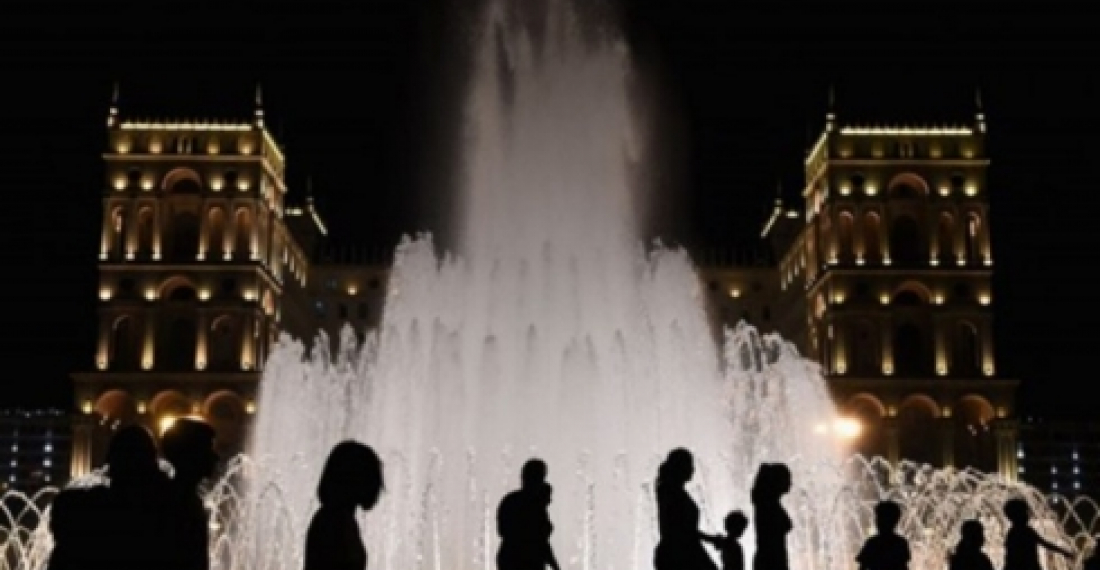
Фото: Правительственное здание в центре Баку, выполненное в стиле советской эпохи. Баку до начала I Европейских Игр 2015 (фото любезно предоставлено Баку 2015).

 

Latest

Editor's choice
Monday Commentary
Monday Commentary: PEACE IN OUR TIME?

Monday Commentary: PEACE IN OUR TIME?

Making peace between Armenia and Azerbaijan was never going to be simple, nor easy, nor quick. It is taking time, writes Dennis Sammut in this Monday Commentary. “There is a sense of realism coming from the leaders of the two countries – President Ilham Aliyev of Azerbaijan and prime minister Nikol Pashinyan of Armenia, that frankly, is necessary and welcome”, he writes. At a time when conflicts are raging all over the world – from Ukraine to the Gulf, from Africa to South Asia, the prospect that Armenia and Azerbaijan had finally, after decades of conflict that left thousands of dead and many more displaced, decided on embarking on a journey of peace was welcomed. Peace between Armenia and Azerbaijan can be top-down up to a point. Both leaders have spent political capital preparing for a peace deal. But both are aware that their people are not ready for peace yet. In fact, in Armenia, most of the elite are negative toward a peace deal with Azerbaijan. Pashinyan needs time to persuade his countryfolk. That is why 2031 is realistic. Ilham Aliyev runs a tighter shop, but he is also not immune to public opinion. Every time someone hits a landmine in Karabakh, which unfortunately happens often, peace comes into question. Which is why Aliyev chooses to sound hardline, more often than not. In pursuing the peace agenda, both Aliyev and Pashinyan need to proceed cautiously. But they are right in making peace the central issue in their agenda. It is the main issue, and the one that will define them in history. So forward, cautiously but resolutely! In pursuing the peace agenda, Aliyev and Pashinyan need to be supported clearly and unambiguously. There are too many people in Baku and Yerevan who are sitting on the sides, waiting. The international community is not doing enough. It is time to be counted. Otherwise, the spoilers will win, and the region will go back to its bad habits. (Click the image to read the full commentary).

Popular

Editor's choice
Monday Commentary
Monday Commentary: European-Azerbaijan relations need an intensive and multifaceted dialogue that is frank and honest

Monday Commentary: European-Azerbaijan relations need an intensive and multifaceted dialogue that is frank and honest

Last week I visited Baku, Azerbaijan. My visit was relatively short, but very intensive, and had many meetings with stakeholders and colleagues. When I arrived in Baku first time in 1996,  Azerbaijan was a different country: weak, poor, and shaken by defeat in war. For thirty year the Karabakh issue dominated the agenda: the political agenda but also the popular mindset. Now, thirty years later, Azerbaijan has returned to Karabakh, and peace with Armenia is on the horizon. It is a new era for Armenia-Azerbaijan relations, for the South Caucasus, but also for Europe.  But we cannot be complacent: the Peace agreement has been initialed but not signed; borders remain closed; TRIPP is ambitious but remains an idea; and there are spoilers who want to turn the clock back. We must not allow them, and in this Europe and Azerbaijan must work together. Europe’ vanguard organization is the European Union – it is a free union of 27 member states; it is a strong global economic force, and increasingly a diplomatic and military force too. But it remains “work in progress” and can often appear dysfunctional. It often lacks collective and institutional memory. In its dealings with Azerbaijan the EU has made many mistakes – not least opening the delegation here late – in 2008. It sometimes appears condescending. Some utterances from the European Parliament and from some quarters in some member states are not understandable even for me. They irritate the Azerbaijanis, but serve no other purpose But Azerbaijan has also not handled relations with the EU well. It has failed to respond when the hand of friendship reached out; and it confused irritating actions, sometimes by well-meaning people; sometimes by outright spoilers, with strategic action. In short, EU-Azerbaijan relations have suffered from a lack of proper dialogue. This dialogue must be frank, honest and multi-faceted involving different segments of society on both sides.   Is Azerbaijan Europe? When Azerbaijan applied to join the Council of Europe in the 1990s, there were some who opposed, saying this was not Europe. I was one of the people who argued that Armenia and Azerbaijan may be on the periphery of the continent geographically, but were European in essence. Certainly their elites. During the discussion on 4 September in Baku, my friend Farhad Mammedov, mentioned that Azerbaijan is not interested in joining the EU, and was now close to the Central Asian countries in the 5 plus 1 format. Neither things mean that Azerbaijan is not Europe. There are several European countries that are not in the EU, and do not want to be, for example Norway and Switzerland. Iceland has recently voted to stay out of the EU. The UK was a member and left. Europe is bigger than the EU, and the holding of the European Political Community summit in Baku in 2027 proves that. Despite all the rhetoric, I never heard the president of Azerbaijan  saying that Azerbaijan is not Europe, nor have I heard any European president say it either. Not wanting to join the EU and forging close relations with neighbouring regions does not make Azerbaijan any less European. It is only logical that when Europeans talk to Azerbaijan they talk like family. The conversation is often frank. It must also be honest, and Europeans need always to remember this too. A frank, honest and multi-faceted dialogue A frank, honest and multifaceted dialogue will contribute to relations between Azerbaijan and the rest of Europe: it will avoid misperception, which unfortunately is very common on both sides; it will provide a forum where problems can be discussed and resolved, and it will increase mutual trust, so that together common problems can be addressed. (click image to read the full Monday Commentary)
Editor's choice
Monday Commentary
Monday Commentary: “The barren rocks of Aden” and “These lands of Yemen are so ruthless”

Monday Commentary: “The barren rocks of Aden” and “These lands of Yemen are so ruthless”

There are two early 20th-century tunes that mark foreign attempts to occupy and “pacify” Yemen. The Scottish tune “The barren rocks of Aden” marks the mobilisation of Highland soldiers, enlisted to be deployed to the Yemeni port of Aden, that in 1837 became the last colony to be incorporated into the British Empire. The tune talks of the harshness of the terrain, but is celebratory, It was even played as a farewell tune to Sir William Luce at the parade in Sharjah celebrating his end as “British Viceroy” in the Middle East in 1966. The second tune is an Anatolian lament. As Ilker Sezer reminded us this weekend, in his weekly feature on “Turkiye Today”, it “mourns the tragic fate of Ottoman soldiers dispatched to the harsh, remote deserts of Yemen during the fall of the empire, young men who marched away from their villages and never returned home. Most of their names, and numbers, were never recorded. Yet, their fate left a mark on the Turkish psyche.” Subsequent invaders have discovered that Yemen is a grave that cannot be overcome by the strength of modern technology, and that whilst Yemeni society is splintered and divided, building a reliable alliance with Yemeni factions is difficult. These are the harsh lessons facing Saudi Arabia, as the Kingdom faces its biggest challenge in its modern history. The leadership of the Kingdom now has to respond decisively. At stake is their very credibility. This is likely to be a long and messy conflict. Saudi military objectives need to be focused: to box in the Houthis rather than destroy them. This is likely to include: (a) regaining territory lost on the Red Sea coast; (b) control over Bab el Mandeb Strait; (c) some kind of cordon sanitaire on the Saudi-Yemeni border; and if things go well (d) the capture of Sanaa. All this would not eliminate the Houthi problem, but it will contain it. In the end the Saudis will have to continue managing Yemen with a mixture of carrot and stick. For the moment, the stick is likely, but the carrot cannot be forgotten either. (click the image to read the Monday Commentary in full)

