


Азербайджан продолжает попытки вырваться из смирительной рубашки МГ ОБСЕ.

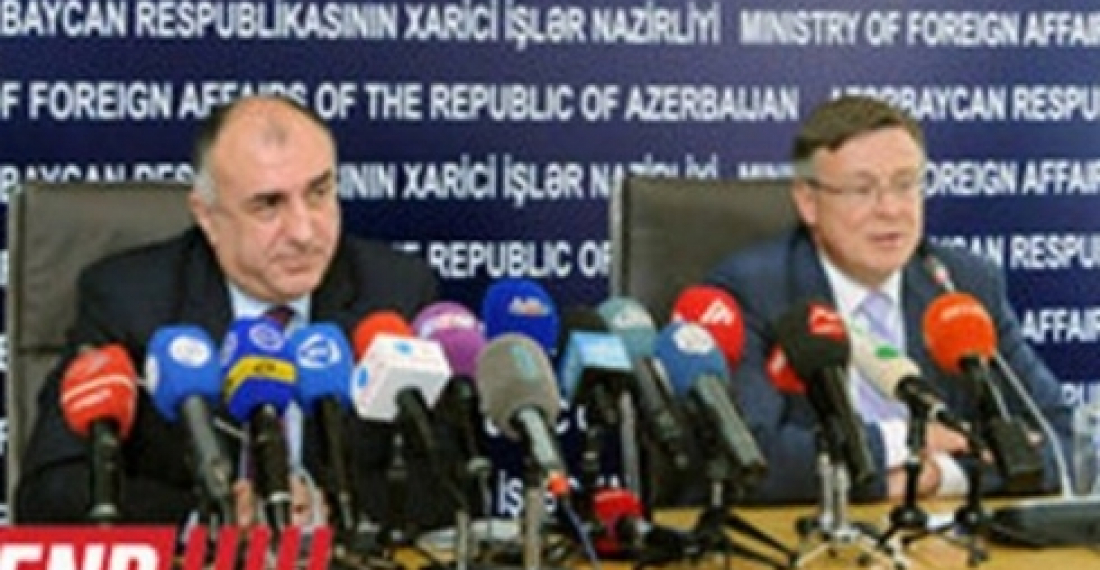
Председатель Организации по безопасности и сотрудничеству в Европе (ОБСЕ), министр иностранных дел Украины Леонид Кожара, отправился в турне по странам Южного Кавказа. Сегодня утром он встретился с министром иностранных дел Азербайджана Эльмаром Мамедъяровым, после чего оба министра сделала заявление для прессы о важности "активизации" работы Минского процесса, которому поручено содействовать переговорам между Арменией и Азербайджаном по урегулированию нагорно-карабахского конфликта.

Мамедъяров также сообщил журналистам, что в скором времени у него состоится еще одна встреча с дипломатами от Франции, России и США, которые являются сопредседателями Минского процесса. Информационное агентство АПА цитирует главу МИД Азербайджана Эльмара Мамедъярова: "Мы намерены двигаться вперед, взяв за основу принципы, озвученные сопредседателями и подтвержденные недавно главами стран-сопредседателей МГ ОБСЕ на саммите Большой восьмерки". АПА сообщает, что министр иностранных дел во время встречи с председателем ОБСЕ в офисе призвал Минскую группу активизировать свою деятельность. Он отметил, что встречи Минской группы следует проводить чаще: "Я попросил Украину как страну, председательствующую в ОБСЕ, чтобы такие заседания в Вене проходили чаще".

Мамедъяров оставил некоторую неопределенность относительно формата будущей встречи: "Это будет либо встреча с сопредседателями, а возможно посредники попытаются организовать и встречу министров." Министр сказал, что позиция Азербайджана остается неизменной: "Наша страна готова начать работу над всеобъемлющим мирным договором, Армения же - нет."

Политический редактор Commonspace.eu в своем комментарии сообщает:

"Вот уже несколько лет Азербайджан пытается вырваться из "смирительной рубашки", которая, как он считает, была надета на страну нынешним форматом Минского процесса ОБСЕ, который был монополизирован тремя странами-сопредседателями, Францией, Россией и США. Азербайджан указывает на отсутствие результатов многолетних переговоров в этом формате в качестве оправдания утверждениям, что формат должен быть изменен. С другой стороны Азербайджана понимают ценность того, что США и Россия, и в меньшей степени Франция, участвуют в процессе посредничества, и все еще надеется, что они смогут оказать давление на Армению, даже если до сих пор не было никаких признаков, что это произойдет.

Ее последняя попытка вовлечь председательствующую в ОБСЕ Украину вряд ли принесет большие результаты, поскольку Украина не в состоянии повлиять на страны-сопредседателей МГ. Однако Украина может настоять на большей отчетности сопредседателей Минской группы перед Постоянным советом ОБСЕ в Вене, и это очень даже может привести к большей подотчетности стран-сопредседателей перед остальной частью международного сообщества по вопросу карабахского урегулирования".

По сообщениям прессы, Мамедъяров и Кожара также обсудили процесс "Хельсинки +40", попытка, запущенная на  последнем СМИД ОБСЕ, обновить работу ОБСЕ спустя сорок лет после подписания в 1975 году Хельсинкского Заключительного акта. В ходе совещания также обсуждалось будущее бакинского офиса ОБСЕ. Азербайджан в начале этого года просил, чтобы офису был понижен статус до уровня проектного офиса, что, в итоге, серьезно бы снизилобы  способность Миссии контролировать вопросы, связанные с госуправлением и правами человека. Украина, которая имеет свои собственные проблемы с правами человека, скорее всего, прибывает в симпатиях к Азербайджану по этому вопросу.

Источник: commonspace.eu по материалам АПА, Тренд и других информационных агентств.

Фото: Министры иностранных дел Азербайджана и Украины на пресс-конференции в Баку, 8 июля 2013 года. (фото любезно предоставлено Агентством Trend).

Related articles

Editor's choice
News
Pope Leo XIV, has called on world leaders to lay down their weapons and choose “encounter” over domination

Pope Leo XIV, has called on world leaders to lay down their weapons and choose “encounter” over domination

The leader of the Catholic Church, Pope Leo XIV, has called on world leaders to lay down their weapons and choose “encounter” over domination. “Let those who have weapons lay them down!”, the Pope urged on Easter Sunday in his traditional Urbi et Orbi message. Speaking to the tens of thousands of pilgrims gathered in St Peter's Square, Pope Leo urged "those who have the power to unleash wars" to chose peace.  This should not be a peace “imposed by force”, he stressed, but one achieved through dialogue – “not with the desire to dominate others, but to encounter them”. Pope Leo warned that the world is “growing accustomed to violence”. We are “becoming indifferent”, he said, not only to the deaths of thousands of people, but to the “hatred and division” war causes, as well as its “economic and social consequences”. Borrowing a phrase from the late Pope Francis, Pope Leo warned of the “ever-increasing ‘globalisation of indifference’”. “We cannot continue to be indifferent!”, he urged. “We cannot resign ourselves to evil!”. For this reason, he said, he would be leading a prayer vigil for peace next Saturday, April 11th, in St Peter’s Basilica.
Editor's choice
News
Israel destroys 17 UNIFIL Cameras

Israel destroys 17 UNIFIL Cameras

Israeli forces destroyed 17 surveillance cameras linked to the United Nations peacekeepers’ main headquarters in southern Lebanon in 24 hours, a UN security official told AFP on Saturday. Since the start of the Israel-Hezbollah war on March 2, the UN Interim Force in Lebanon (UNIFIL) has been caught in the crossfire in the country’s south, with Hezbollah launching attacks on Israel and its troops, and Israeli forces pushing into border towns. The official, who requested anonymity, said “17 of the headquarters’ cameras have been destroyed by the Israeli army” in the coastal town of Naqura. UNIFIL spokeswoman Kandice Ardiel told AFP on Saturday that “the cameras appear to have been destroyed by some kind of laser.” She added that “(Israeli) soldiers are present in Naqura and have been undertaking massive demolitions of buildings in the village this week.” Earlier this week, Ardiel told AFP that “not only have these demolitions destroyed civilian homes and businesses, but the strength of the blasts have caused damage to UNIFIL’s headquarters.” Three Indonesian peacekeepers from the UN force have been killed in two separate incidents over the past week. UNIFIL also reported Friday an “explosion” in one of its bases near Odaisseh in south Lebanon that wounded three personnel, adding that they “do not yet know the origin of the explosion.” The Israeli army accused Hezbollah of firing “a rocket that landed in a UNIFIL outpost.” The UN office in Jakarta said on Saturday the wounded were Indonesian. Indonesia condemned the incident as “unacceptable,” saying “these events underscore the urgent need to strengthen protection for UN peacekeeping forces amid an increasingly dangerous conflict situation.” According to the UN, 97 force members have been killed in violence since its establishment in 1978 to monitor the withdrawal of Israeli forces after they invaded Lebanon.

Popular

Editor's choice
Interview
Thursday Interview: Murad Muradov

Thursday Interview: Murad Muradov

Today, commonspace.eu starts a new regular weekly series. THURSDAY INTERVIEW, conducted by Lauri Nikulainen, will host  persons who are thinkers, opinion shapers, and implementors in their countries and spheres. We start the series with an interview with Murad Muradov, a leading person in Azerbaijan's think tank community. He is also the first co-chair of the Action Committee for a new Armenian-Azerbaijani Dialogue. Last September he made history by being the first Azerbaijani civil society activist to visit Armenia after the 44 day war, and the start of the peace process. Speaking about this visit Murad Muradov said: "My experience was largely positive. My negative expectations luckily didn’t play out. The discussions were respectful, the panel format bringing together experts from Armenia, Azerbaijan, and Turkey was particularly valuable during the NATO Rose-Roth Seminar in Yerevan, and media coverage, while varied in tone, remained largely constructive. Some media outlets though attempted to represent me as more of a government mouthpiece than an independent expert, which was totally misleading.  Overall, I see these initiatives as important steps in rebuilding trust and normalising professional engagement. The fact that soon a larger Azerbaijani civil society visits to Armenia followed, reinforces the sense that this process is moving in the right direction." (click the image to read the interview in full)

