


Ильхам Алиев заявляет, что переговоры по Карабаху находятся в "решающем этапе".
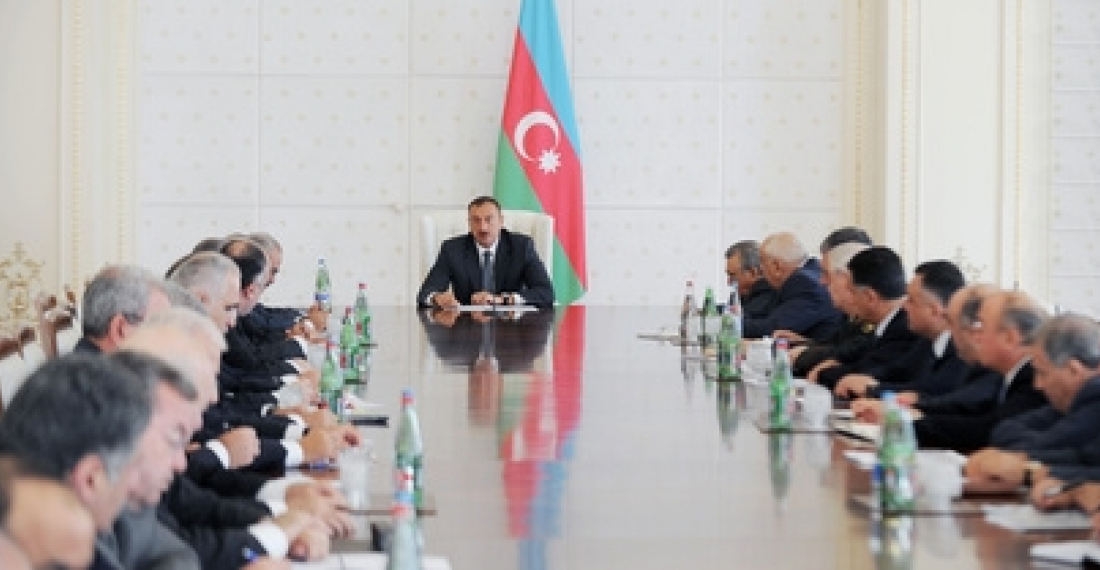
Президент Азербайджана Ильхам Алиев дал оценку работе правительства в своей речи обращенной к Кабинету Министров во время которой он также говорил о процессах вокруг карабахского конфликта.

Президент Алиев заявил об интесификации дипломатической активности по разрешению карабахского конфликта, включая контакты с Президентами Франции, США и России. Он заявил, что переговоры находятся на  решающем этапе. Также Президент отметил, что Армения стремилась сохранить статус-кво на протяжении последних 20 лет. Президент исключил возможность независимости Нагорного Карабаха и сказал, что Азербайджан будет продолжать проводить политику восстановления своей территориальной целостности.

Алиев заявил, что пришло время открыто говорить о мадридских принципах.

Агентство "Азер ТАдж" цитирует Президента Алиева:

"Я считаю, что в этом вопросе не должно быть никаких сомнений и недоразумений. Я считаю, что настало время, когда мы должны открыто говорить об этом. Прежде всего, там предусматривался вывод оккупационных сил Армении с захваченных земель. Предусматривались немедленный вывод войск Армении из пяти районов, через пять лет - из двух районов и возвращение граждан Азербайджана на родные земли. В этих предложениях также было предоставление Нагорному Карабаху временного статуса. Функционирование коридора между Нагорным Карабахом и Арменией также было в тех принципах. Для обеспечения безопасности как армянского, так и азербайджанского населения был необходим ввод в регион миротворческих сил. Также должно было быть обеспечено возвращение всех пострадавших от оккупации людей в прежние места проживания."

По данным информационного агентства Алиев охарактеризовал Армянский ответ после саммита в Казани как неприемлемый и истерический, и направленный на поддержание статус-кво.

Источник:
commonspace.eu newsroom

Фото:
Обращение Президента Алиева к Кабинету Министров 12 июля 2011 (фото: www.president.az)

Related articles

Editor's choice
News
The British prime minister says Europe must "stand on its own two feet" when it comes to defence

The British prime minister says Europe must "stand on its own two feet" when it comes to defence

The UK will deploy a carrier strike group, led by the aircraft carrier HMS Prince of Wales to the Arctic and the High North as part of efforts to bolster security against Russian threats. British prime minister, Sir Keir Starmer announced the deployment in a speech on Saturday (14 February) at the Munich Security Conference. Europe must be ready to fight to protect its people, values, and way of life,  Sir Keir told the Conference. Starmer also called for deeper links and cooperation, including economic ties, between the UK and EU. The PM stressed the continent must "stand on its own two feet" when it comes to defence commitments. "We must build our hard power, because that is the currency of the age," he told the conference. (Click image to read the full story).

Popular

Editor's choice
Interview
Thursday Interview: Murad Muradov

Thursday Interview: Murad Muradov

Today, commonspace.eu starts a new regular weekly series. THURSDAY INTERVIEW, conducted by Lauri Nikulainen, will host  persons who are thinkers, opinion shapers, and implementors in their countries and spheres. We start the series with an interview with Murad Muradov, a leading person in Azerbaijan's think tank community. He is also the first co-chair of the Action Committee for a new Armenian-Azerbaijani Dialogue. Last September he made history by being the first Azerbaijani civil society activist to visit Armenia after the 44 day war, and the start of the peace process. Speaking about this visit Murad Muradov said: "My experience was largely positive. My negative expectations luckily didn’t play out. The discussions were respectful, the panel format bringing together experts from Armenia, Azerbaijan, and Turkey was particularly valuable during the NATO Rose-Roth Seminar in Yerevan, and media coverage, while varied in tone, remained largely constructive. Some media outlets though attempted to represent me as more of a government mouthpiece than an independent expert, which was totally misleading.  Overall, I see these initiatives as important steps in rebuilding trust and normalising professional engagement. The fact that soon a larger Azerbaijani civil society visits to Armenia followed, reinforces the sense that this process is moving in the right direction." (click the image to read the interview in full)



