Европейско-азербайджанское общество отметило День Независимости Азербайджана мероприятием в Европейском Парламенте
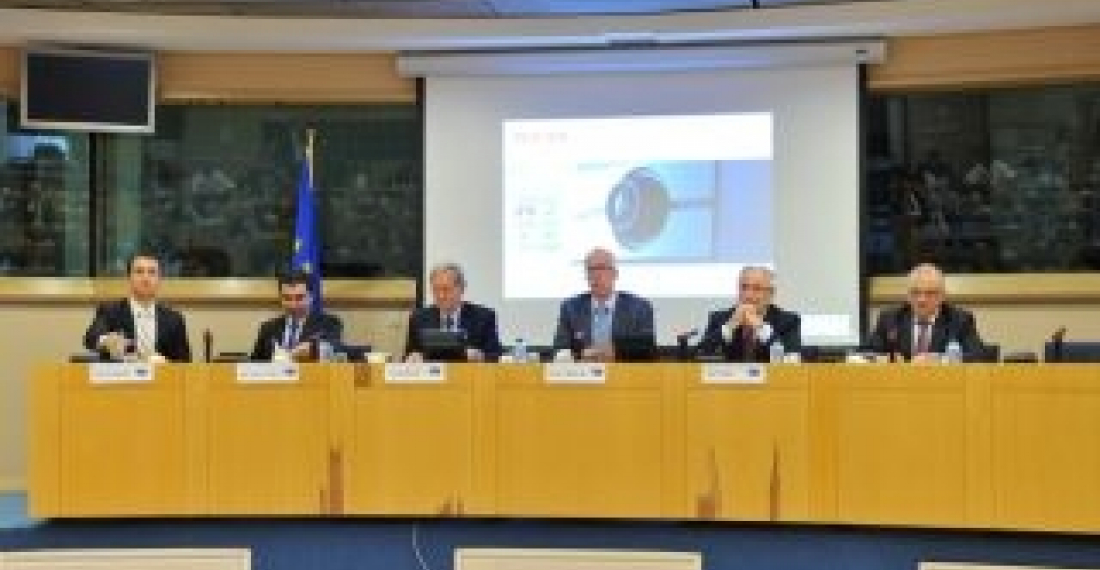
Европейско-азербайджанское общество организовало мероприятие в Европейском парламенте на прошлой неделе по случаю 20-летия независимости Азербайджана. Члены Европейского парламента Тунне Келам, Евгений Кирилов и Иво Вайгль  присоединились к Эмину Эюбову, послу Азербайджана в европейских институтах, давая оптимистичный прогноз стране. Они подчеркнули необходимость мира в армяно-азербайджанском конфликта вокруг Нагорного Карабаха и непрерывность ускоренного экономического развития. Другим членом группы был Тале Гейдаров, председатель и основатель Европейско-азербайджанского общества, и Йоран Линдблад, бывший вице-президент Парламентской Ассамблеи Совета Европы (ПАСЕ) и председатель Комиссии по политическим вопросам ПАСЕ, который выступал в роли арбитра дискуссии.

Посол Эйюбов подвел итоги азербайджанского демократического развития и объяснил, что его страна является "древним народом", хоть и "молодым государством". После периода беспорядка в 1991-93, из-за войны с Арменией, в сочетании с экономическим спадом, ситуация быстро совершенствуются и была достигнута стабильность. Он подчеркнул потенциальные экономические выгоды для Армении, в случае, если мир будет достигнут, так как это позволило бы перевозить углеводородные ресурсы через ее территорию.

Посол подчеркнул, что, начиная с 1994 года, Азербайджан превратился в "локомотив" для углеводородных ресурсов, становясь надежным источником энергии для Западной Европы. Он привел цифры из The Economist, которая пришла к выводу, что Азербайджан пережил наибольший рост ВВП в мире в течение последнего десятилетия, в настоящее время на него приходится 83 процента всего ВВП Южного Кавказа. Что касается безопасности, он подчеркнул, участие его страны в различных миротворческих миссиях НАТО, в том числе в Афганистане. Он признал, что самой большой проблемой остается достижение "конструктивного решения" по Нагорному Карабаху. Он пригласил всех присутствующих принять участие в Евровидении в Баку в мае 2012 года.

Источник: commonspace.eu по материалам агентств

Фото: Участники дискуссии на мероприятии в Европейском парламенте 20 октября 2011 года. (Фото любезно предоставлено Европейско-азербайджанским обществом)

Related articles

Editor's choice
News
Germany accuses Russia of cyberattacks and disinformation campaign

Germany accuses Russia of cyberattacks and disinformation campaign

The German government holds Russia responsible for a cyberattack on German air traffic control, and for targeted disinformation campaigns before the last federal election. According to the German Foreign Office in Berlin, the incidents could be clearly attributed to the Russian military intelligence service, the GRU. In response, the Russian ambassador to Berlin was summoned to the Foreign Ministry. "We have been observing a massive increase in threatening hybrid activities by Russia for some time now," a spokesperson for the Foreign Ministry stated. These range from disinformation campaigns and espionage to cyberattacks and sabotage attempts. The aim is to divide society, sow distrust, and undermine confidence in democratic institutions. The spokesperson added that with these actions, Russia is "very concretely threatening our security, not only through its war of aggression against Ukraine, but also here in Germany."  The Foreign Ministry spokesperson explained that the cyberattack on air traffic control in August 2024 was clearly attributed to the hacker collective "APT28," known as "Fancy Bear," and to the responsibility of the Russian military intelligence service, the GRU. Furthermore, it could now be "conclusively stated" that Russia had attempted "to influence and destabilize both the last Federal election and the ongoing internal affairs of the Federal Republic of Germany." There was "absolutely irrefutable evidence" for this". The so-called "Storm 1516" campaign, which has been running since 2024, is allegedly backed by "reliable information" that the Moscow-based think tank "Center for Geopolitical Expertise" is behind it. The Center is also said to be supported by Russian military intelligence. Its primary aim is to influence democratic elections in the West. (Click the image to read more).
Editor's choice
News
NATO Chief says war is on Europe's doorstep, and warns against complacency

NATO Chief says war is on Europe's doorstep, and warns against complacency

Russia could attack a NATO country within the next five years, the Secretary General of NATO, Mark Rutte, said in a stark new warning. "NATO's own defences can hold for now," Rutte warned in Berlin, but conflict was "next door" to Europe, and he feared "too many are quietly complacent, and too many don't feel the urgency, too many believe that time is on our side. "Russia is already escalating its covert campaign against our societies," Rutte said in a speech in Germany. "We must be prepared for the scale of war our grandparents or great-grandparents endured." Earlier this month, Russia's President Vladimir Putin said his country was not planning to go to war with Europe, but it was ready "right now" if Europe wanted to - or started a war. But similar reassurances were given by Moscow in 2022, just before 200,000 Russian troops crossed the border and invaded Ukraine. Putin has accused European countries of hindering US efforts to bring peace in Ukraine - a reference to the role Ukraine's European allies have recently played in trying to change a US peace plan to end the war, whose initial draft was seen as favouring Russia. But Putin was not sincere, Nato's secretary-general said in the German capital, Berlin. Supporting Ukraine, he added, was a guarantee for European security. "Just imagine if Putin got his way; Ukraine under the boot of Russian occupation, his forces pressing against a longer border with Nato, and the significantly increased risk of an armed attack against us." Russia's economy has been on a war footing for more than three years now - its factories churn out ever more supplies of drones, missiles and artillery shells. According to a recent report by the Kiel Institute for the World Economy, Russia has been producing each month around 150 tanks, 550 infantry fighting vehicles, 120 Lancet drones and more than 50 artillery pieces. The UK, and most of its Western allies, are simply not anywhere near this point. Analysts say it would take years for Western Europe's factories to come close to matching Russia's mass-production of weapons. "Allied defence spending and production must rise rapidly, our armed forces must have what they need to keep us safe," the Nato chief said.

Popular

Editor's choice
News
Germany accuses Russia of cyberattacks and disinformation campaign

Germany accuses Russia of cyberattacks and disinformation campaign

The German government holds Russia responsible for a cyberattack on German air traffic control, and for targeted disinformation campaigns before the last federal election. According to the German Foreign Office in Berlin, the incidents could be clearly attributed to the Russian military intelligence service, the GRU. In response, the Russian ambassador to Berlin was summoned to the Foreign Ministry. "We have been observing a massive increase in threatening hybrid activities by Russia for some time now," a spokesperson for the Foreign Ministry stated. These range from disinformation campaigns and espionage to cyberattacks and sabotage attempts. The aim is to divide society, sow distrust, and undermine confidence in democratic institutions. The spokesperson added that with these actions, Russia is "very concretely threatening our security, not only through its war of aggression against Ukraine, but also here in Germany."  The Foreign Ministry spokesperson explained that the cyberattack on air traffic control in August 2024 was clearly attributed to the hacker collective "APT28," known as "Fancy Bear," and to the responsibility of the Russian military intelligence service, the GRU. Furthermore, it could now be "conclusively stated" that Russia had attempted "to influence and destabilize both the last Federal election and the ongoing internal affairs of the Federal Republic of Germany." There was "absolutely irrefutable evidence" for this". The so-called "Storm 1516" campaign, which has been running since 2024, is allegedly backed by "reliable information" that the Moscow-based think tank "Center for Geopolitical Expertise" is behind it. The Center is also said to be supported by Russian military intelligence. Its primary aim is to influence democratic elections in the West. (Click the image to read more).