


Анализ: Влияние Covid-19 на экономику Азербайджана

Ведущий экономический аналитический центр Азербайджана Центр экономического и социального развития (CESD) только что опубликовал предварительную оценку воздействия пандемии Covid-19 на экономику Азербайджана. В своих рекомендациях CESD говорит, что теневая экономика должна быть устранена, а государственные предприятия должны быть обязаны проводить более глубокие реформы. В докладе делается вывод, что «переход к более либеральному режиму представляется разумным в этом контексте».

В докладе говорится, что из постсоветских стран Азербайджан выделил самую большую долю ВВП, чтобы устранить экономические последствия, вызванные вспышкой COVID-19. В докладе предупреждается, что создание благоприятных экономических условий в постпандемический период будет иметь такое же важное значение, как и поддержка экономики в период самой пандемии.

Согласно официальным данным Госкомстата, валовый внутренний продукт (ВВП), произведенный в стране в период с января по июнь 2020 года, был на 2,7% меньше по сравнению с аналогичным периодом прошлого года. Добавленная стоимость в ненефтегазовом секторе экономики снизилась на 2,5%, в то время как в нефтегазовом секторе снижение составило 2,9%. Из-за ограничений на поездки туристический сектор оказался в числе наиболее пострадавших секторов. Также существенно пострадали услуги, питание и транспорт, что привело к значительным убыткам. Существенно снизились и объемы экспорта и импорта, в основном связанное со снижением экспорта нефти.

В первой половине 2020 года также наблюдался спад промышленного производства. Спрос на иностранную валюту неуклонно рос по мере роста обеспокоенности потребителей.

В отчете отмечается, что международное рейтинговое агентство Fitch прогнозировало долгосрочный рейтинг дефолта эмитента («РДЭ») Азербайджана в иностранной валюте на уровне «BB+» с негативным прогнозом.

Правительству пришлось принять особые меры, направленные на стабилизацию и поддержание экономики.

В отчете представлен План действий Кабинета министров, в котором изложены меры, которые впоследствии были приняты для смягчения некоторых экономических последствий пандемии для бизнеса и экономики. Сумма, выделенная из госбюджета на выплату заработной платы рабочим, работающим на территориях, пострадавших от пандемии, составила 69 119 000 манатов (40 658 235 долларов США). 55 637 000 манатов (32 727 647 долларов США) выделено на поддержку собственников в сфере самозанятости или микропредпринимательства.

По официальным данным, в Фонд развития предпринимательства было выплачено 35 миллионов манатов (20,58 миллиона долларов) с целью предоставления государственных гарантий по банковским кредитам и субсидированных процентных ставок. По этим направлениям на основании приказа Минэкономики выплачено 159 757 тысяч манатов (93 974 705 долларов). Программа экономической поддержки правительства также включала некоторые налоговые льготы и налоговые льготы для хозяйствующих субъектов. Чтобы быть более последовательным, налогоплательщики, занятые в сфере общественного питания, имели снижение налога и освобождение от налога на прибыль. В то же время импорт некоторых товаров, связанных с продовольствием и медицинской безопасностью, в том числе сырья, используемого для производства этих товаров, был временно освобожден от налога на добавленную стоимость (НДС). Между тем, в зависимости от выбранного метода налогообложения налогоплательщикам также предоставлялся ряд налоговых льгот.

В докладе говорится, что экосистема предпринимательства сильно пострадала в результате ситуации, возникшей в результате пандемии, и необходимо рассмотреть дополнительные пакеты поддержки.

В докладе рекомендуется продлить налоговые льготы для предприятий, пострадавших от пандемии, для существующих бенефициаров до 1 января 2021 года. Между тем, в нем говорится, что существует необходимость в отраслевой оценке, которая может помочь в определении областей, в которым наиболее нужна помощь.

В заключение в докладе говорится, что в процессе проводимых в настоящее время реформ возникла необходимость в новых подходах, и постепенное открытие экономики должно основываться на новых стандартах. Существует необходимость оптимизировать использование доходов от нефти, продолжая изучать альтернативные источники для бюджета, поскольку возрастающая зависимость от доходов от нефти противоречит политике диверсификации.

В докладе говорится, что теневая экономика должна быть устранена, а государственные предприятия (ГП) должны быть обязаны проводить более глубокие реформы. В этом контексте целесообразен переход к более либеральному режиму.

В заключение в отчете отмечается, что экономическая стратегия восстановления в постпандемический период требует дальнейшего рассмотрения и детального изучения.

источник: commonspace.eu по материалам CESD, Баку.

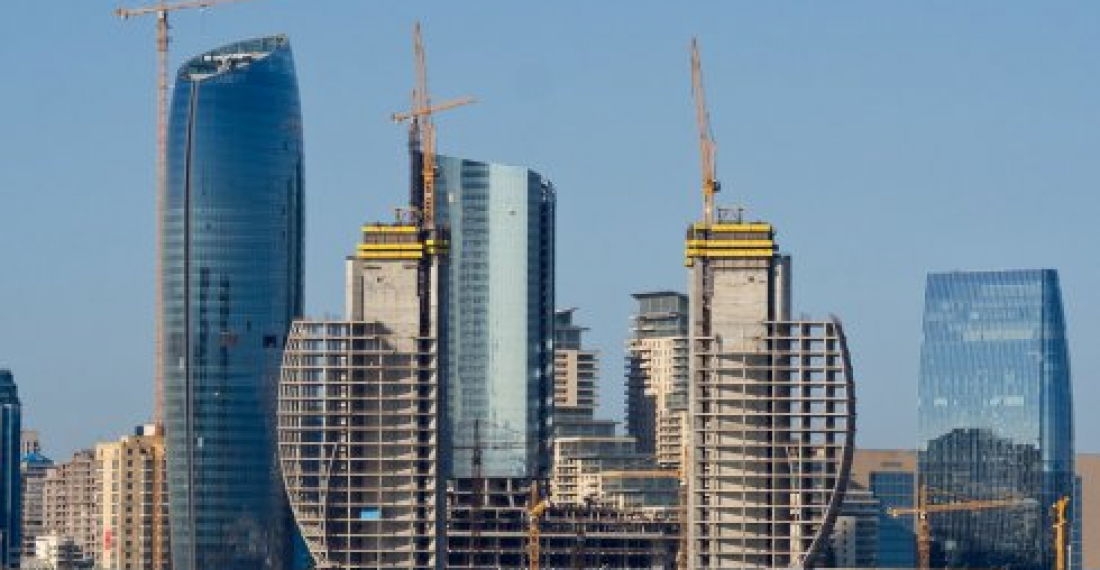
фото: Baku Skyline (архивное фото)

Мнения, выраженные в авторских материалах и комментариях, не обязательно отражают позицию commonspace.eu или его партнеров.
 

Related articles

Editor's choice
News
Russia adds pressure on Armenia ahead of key elections; recalls Ambassador in Yerevan for consultations

Russia adds pressure on Armenia ahead of key elections; recalls Ambassador in Yerevan for consultations

Ahead of key parliamentary elections,scheduled to be held in Armenia on Sunday, 7 June, Russia continues to attempt to put pressure on the Armenian Government led by prime minister Nikol Pashinyan. On 30 May, Russia recalled its Ambassador to Yerevan for consultations. A terse statement, published on the website of the Russian Foreign Ministry, said, "The Ambassador of the Russian Federation to the Republic of Armenia , S.P. Kopyrkin, has been summoned to Moscow for consultations in connection with the steps taken by the Armenian leadership to move closer to the European Union, which are detrimental to cooperation within the EAEU." This followed a statement issued the day before, by the leaders of the Eurasian Economic Union (EAEU) that challenges the Armenian trajectory towards approximating to the European Union. Vladimir Putin is undertood to have personally pushed the other four EAEU leaders to issue the statement, which said: "Taking into account the significant risks to the economic security of the member states of the Eurasian Economic Union (hereinafter referred to as the Union) arising in connection with the preparation of the Republic of Armenia for accession to the European Union, as well as the need to prevent the associated damage to the member states of the Union: decided that the members of the Eurasian Intergovernmental Council from the Republic of Belarus, the Republic of Kazakhstan, the Kyrgyz Republic and the Russian Federation will report at the next meeting of the Supreme Eurasian Economic Council in December 2026 on the possible consequences of the suspension of the Treaty on the Eurasian Economic Union with respect to the Republic of Armenia. We share the position on the need to hold a national referendum in the Republic of Armenia as soon as possible on joining the European Union or continuing to be part of the Eurasian Economic Union."
Editor's choice
News
The leaders of the states of the Eurasian Economic Union issued a tough statement warning fellow-member state Armenia of the consequences of its desire to join the European Union.

The leaders of the states of the Eurasian Economic Union issued a tough statement warning fellow-member state Armenia of the consequences of its desire to join the European Union.

The leaders of the states of the Eurasian Economic Union (EEAS) issued a tough statement warning fellow-member state Armenia of the consequences of its desire to join the European Union. The stark, sharply worded,  warning, comes days before crucial parliamentary elections in Armenia, scheduled for 7 June. The full statement said, “We, the Presidents of the Republic of Belarus, the Republic of Kazakhstan, the Kyrgyz Republic and the Russian Federation, Taking into account the actions of the Republic of Armenia aimed at joining the European Union, including the approval in 2025 by the National Assembly of the Republic of Armenia and the signing by the President of the Republic of Armenia of the Law of the Republic of Armenia "On the Start of the Process of Accession of the Republic of Armenia to the European Union", as well as the confirmation by the European Union of the European aspirations of the Government of the Republic of Armenia, expressed in the joint declaration following the first Armenia-European Union summit, adopted on 5 May 2026, Taking into account the significant risks to the economic security of the member states of the Eurasian Economic Union (hereinafter referred to as the Union) arising in connection with the preparation of the Republic of Armenia for accession to the European Union, as well as the need to prevent the associated damage to the member states of the Union: decided that the members of the Eurasian Intergovernmental Council from the Republic of Belarus, the Republic of Kazakhstan, the Kyrgyz Republic and the Russian Federation will report at the next meeting of the Supreme Eurasian Economic Council in December 2026 on the possible consequences of the suspension of the Treaty on the Eurasian Economic Union with respect to the Republic of Armenia. We share the position on the need to hold a national referendum in the Republic of Armenia as soon as possible on joining the European Union or continuing to be part of the Eurasian Economic Union. Astana, May 29, 2026” A meeting of the Supreme Eurasian Economic Council was held in Astana, Kazakhstan, on May 29, 2026. The meeting of the Supreme Eurasian Economic Council in a restricted format was attended by Russian President Vladimir Putin, Belarusian President Alexander Lukashenko , Kazakh President Kassym-Jomart Tokayev , Kyrgyz President Sadyr Japarov , Armenian Deputy Prime Minister Mher Grigoryan, and Chairman of the Board of the Eurasian Economic Commission Bakytzhan Sagintayev. From the Russian side, the meeting was also attended by Deputy Prime Minister and member of the Council of the Eurasian Economic Commission Alexey Overchuk and Presidential Aide Yury Ushakov . The heads of delegations from EAEU observer states, including President of Uzbekistan Shavkat Mirziyoyev , Vice President of Cuba Salvador Valdés Mesa, Minister of Industry, Mines, and Trade of Iran Mohammad Atabak, and CIS Secretary General Sergei Lebedev, joined the expanded meeting . Following the meeting of the Supreme Eurasian Economic Council, a number of documents were signed .

Popular

Editor's choice
Interview
Thursday Interview: Murad Muradov

Thursday Interview: Murad Muradov

Today, commonspace.eu starts a new regular weekly series. THURSDAY INTERVIEW, conducted by Lauri Nikulainen, will host  persons who are thinkers, opinion shapers, and implementors in their countries and spheres. We start the series with an interview with Murad Muradov, a leading person in Azerbaijan's think tank community. He is also the first co-chair of the Action Committee for a new Armenian-Azerbaijani Dialogue. Last September he made history by being the first Azerbaijani civil society activist to visit Armenia after the 44 day war, and the start of the peace process. Speaking about this visit Murad Muradov said: "My experience was largely positive. My negative expectations luckily didn’t play out. The discussions were respectful, the panel format bringing together experts from Armenia, Azerbaijan, and Turkey was particularly valuable during the NATO Rose-Roth Seminar in Yerevan, and media coverage, while varied in tone, remained largely constructive. Some media outlets though attempted to represent me as more of a government mouthpiece than an independent expert, which was totally misleading.  Overall, I see these initiatives as important steps in rebuilding trust and normalising professional engagement. The fact that soon a larger Azerbaijani civil society visits to Armenia followed, reinforces the sense that this process is moving in the right direction." (click the image to read the interview in full)

