Анализ: Тело убитого солдата становится предметом для торга в карабахском конфликте

Данная аналитическая статья была подготовлена редакционной командой commonspace.eu

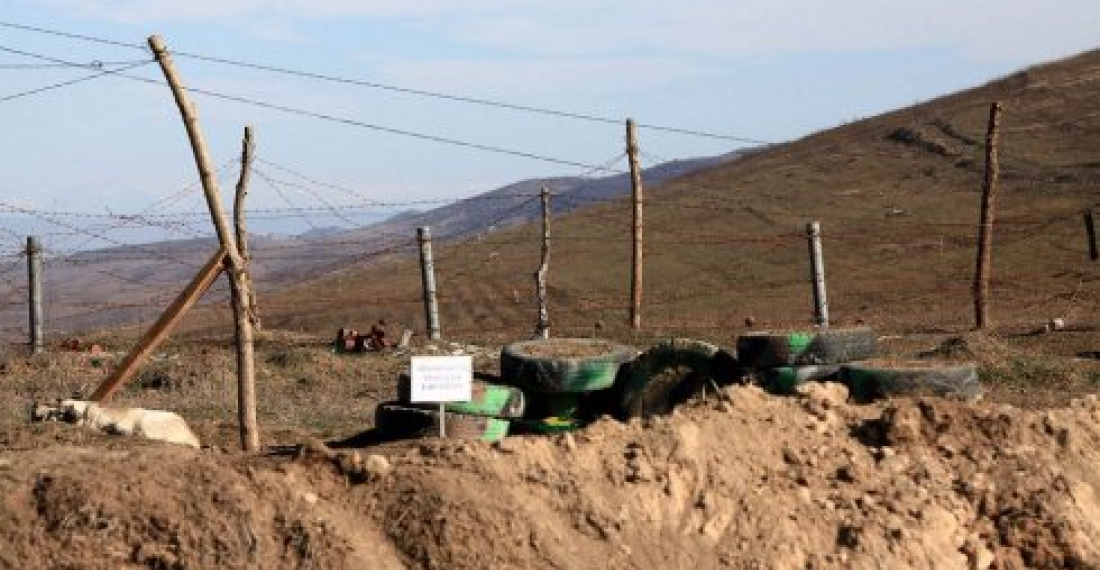
29 декабря, когда мир готовился попрощаться со сложным 2016 годом и уже приветствовать новый год, на международной границе между Арменией и Азербайджаном, на некотором расстоянии от зоны нагорно-карабахского конфликта, произошел инцидент, в результате которого обе стороны понесли потери. Точное количество потерь неизвестно, так как обе стороны дают противоречивые сведения о происшествии, а также о количестве убитых или раненых. Стороны обвиняют друг друга в провоцировании инцидента, и в дальнейшем реагировании на него..

У данного инцидента немного отличная характеристика от тех, что происходят на регулярной основе вокруг Нагорного Карабаха. На инцидент последовала почти мгновенная реакция со стороны Организации Договора о коллективной безопасности (ОДКБ), военный блок во главе с Россией, членом которой является Армения, но не является Азербайджан. Позиция ОДКБ всегда заключалась в том, что она не может вмешиваться в инциденты в зоне карабахского конфликта, но произошедшие на международной границе это совсем другое дело. Этот инцидент стал возможностью доказать свои слова. Что она и сделала в заявлении своего генерального секретаря Николая Бордюжи, опубликованном через несколько часов после инцидента, выразив озабоченность, но и добавив:

"Рассматриваем эти действия на территории государства-члена ОДКБ как провокационные, особенно на фоне достаточно тяжелого инцидента в Нагорно-Карабахской Республике с применением тяжелого вооружения и бронетехники в апреле сего года."

Не упоминая Азербайджан, в нем говорилось, что инцидент произошел на территории государства-члена (что может означать только Армению, поскольку Азербайджан не является членом организации), и в заявлении говорилось, что это было вторжение Азербайджана на территорию Армении. Кроме того, ссылка на "Нагорно-Карабахскую Республику" - непризнанный субъект де-факто контролирующий территорию Нагорного Карабаха при поддержке Армении - стало беспрецедентным в заявлении международной организации. Как и следовало ожидать, реакция Азербайджана была яростной.

На следующий день, Армения, через Facebook, сообщила всему миру, что она ответила на этот инцидент. В записи на странице пресс-секретаря Министерства обороны Армении, Арцруна Ованнисяна, было сказано следующее:

"В ночь на 30 декабря произошло логическое развитие имевшей место накануне азербайджанской провокации. Армянские подразделения провели карательные действия, в результате чего противник понес еще 4 потери".

Ситуация на местах стабилизировалась в новогоднюю ночь, но политические осадки продолжили выпадать. В отличие от эскалаций в апреле прошлого года, когда Москва, казалось, контролировала все от начала до конца, на этот раз Кремль, как представляется, был пойман врасплох. 30 декабря МИД России опубликовало немногословное заявление.

"По поступающей информации, на армяно-азербайджанской границе произошли боестолкновения. Сообщается о жертвах среди военнослужащих с обеих сторон. Мы выражаем соболезнования семьям, потерявшим своих близких. Призываем стороны продолжать строго придерживаться взятых на себя обязательств по поддержанию режима прекращения огня и незамедлительно предпринять все необходимые шаги по стабилизации ситуации. Что касается заявления генерального секретаря Организации Договора о коллективной безопасности Николая Бордюжи, то позиция государств-членов ОДКБ по нагорно-карабахскому конфликту четко выражена в их совместном заявлении, принятом 14 октября с.г. в Ереване".

В то же время, было также объявлено, что срок пребывания Николая Бордюжи на посту генерального секретаря ОДКБ истек 31 декабря. Но замена до сих пор не названа. Армяне говорят, что сейчас их черёд на этот пост, но очевидно, в ОДКБ по данному вопросу есть разногласия. Не ясно, был ли Бордюжа вынужден уйти в отставку до того как назовут его преемника - как считают азербайджанцы, или же это была стандартной процедурой, и он просто ушел в отставку в день, когда истек срок его полномочий. Армянские власти продолжают настаивать на том, что следующим генеральным секретарем должен быть армянин, хотя решение по этому вопросу вряд ли стоит ожидать до апреля. Спорное заявление от 29 декабря продолжало висеть на сайте ОДКБ в течение нескольких дней, но к 12 январю доступ на веб-сайт был закрыт, и посетителям сообщалось, что "на сайте ведутся технические работы". (Ссылка)

Остальная часть международного сообщества наблюдало за всем этим в тишине, отчасти потому, что в Европе и в других странах все были на праздниках, отчасти потому, что пытались понять, что происходит. Наконец, группой стран Сопредседателей Минской группы ОБСЕ 9 января, спустя двенадцать дней после инцидента, было опубликовано заявление. К этому времени, всплыл еще один вопрос. Армения удерживает тело мертвого азербайджанского солдата, убитого в перестрелке 29 декабря, и, судя по всему, отказывается передать его. В связи с этим в заявлении сопредседателей этому также было уделено внимание, так как на них теперь уже для решения этой проблемы оказывали большое давление со стороны Азербайджана. В заявлении сопредседателей сказано следующее:

"Баку и Ереван продолжают обвинять друг друга в попытке вторжения 29 декабря 2016 года на армяно-азербайджанской границе, что привело к жертвам. Вооруженные силы Армении все еще удерживают тело погибшего в бою азербайджанского военнослужащего.

Нарушения режима прекращения огня являются неприемлемыми и противоречат признанным обязательствам сторон, которые несут полную ответственность за не применение силы. Сопредседатели призывают лидеров Армении и Азербайджана строго соблюдать договоренности, достигнутые в ходе встреч на высшем уровне в Вене и Санкт-Петербурге в 2016 году, в том числе обязательства согласовать в кратчайшие сроки механизм по проведению расследований ОБСЕ. Сопредседатели также призывают к возвращению без промедления, человеческих останков, в соответствии с договоренностями Астраханской встречи на высшем уровне 2010 года, имея в виду исключительно гуманитарный характер этого вопроса. Мы призываем стороны прекратить взаимные обвинения и принять все необходимые меры для стабилизации ситуации на местах."

Эти события являются классическим примером того, как нынешняя ситуация вокруг карабахского конфликта может легко перерасти в сложный международный спор, и примером слабости международного сообщества даже оценить ситуацию на местах, не говоря уже о контроле над ней. Армяне настаивают на том, что у них есть доказательства того, что инцидент был спровоцирован Азербайджаном и, что это первоначально было азербайджанским вторжением. Азербайджанцы отвергают это, и говорят, что Армения пыталась создать инцидент, который мог бы впутать ОДКБ в конфликт.

Тем не менее, еще раз, возник еще один некрасивый аспект этого конфликта. Не в первый раз мы видим грубое нарушение норм международного гуманитарного права. Существует достаточно смехотворных доказательств того, что обе стороны совершили серьезные нарушения международного гуманитарного права во время боевых действий в апреле 2016 года. В связи с этим отказ Армении передать обратно тело мертвого солдата неприемлем. МККК прилагает все усилия, чтобы этот вопрос был решен как можно скорее. Представитель МККК в Баку, во вторник (10 января) сообщил следующее: "Мы понимаем, что в Армении по поводу этого инцидента продолжается расследование. Тем не менее, солдата должно быть возвращено его семье как можно скорее. Мы готовы выступить в качестве нейтрального посредника при передаче тела".

К сожалению, и неприемлемо, что тело убитого солдата стало последним предметом для торга в этой печальной саге.

Международному сообществу между тем нужно быть крайне бдительным и не сводить глаз с мяча в карабахском конфликте. Это будет все труднее и труднее в эти очень трудные времена для международной системы, и, если оно будет не в состоянии отреагировать должным образом и своевременно на инциденты, то они могут иметь серьезные последствия.

Данная аналитическая статья была подготовлена редакционной командой commonspace.eu

 

Latest

Editor's choice
Monday Commentary
Monday Commentary: PEACE IN OUR TIME?

Monday Commentary: PEACE IN OUR TIME?

Making peace between Armenia and Azerbaijan was never going to be simple, nor easy, nor quick. It is taking time, writes Dennis Sammut in this Monday Commentary. “There is a sense of realism coming from the leaders of the two countries – President Ilham Aliyev of Azerbaijan and prime minister Nikol Pashinyan of Armenia, that frankly, is necessary and welcome”, he writes. At a time when conflicts are raging all over the world – from Ukraine to the Gulf, from Africa to South Asia, the prospect that Armenia and Azerbaijan had finally, after decades of conflict that left thousands of dead and many more displaced, decided on embarking on a journey of peace was welcomed. Peace between Armenia and Azerbaijan can be top-down up to a point. Both leaders have spent political capital preparing for a peace deal. But both are aware that their people are not ready for peace yet. In fact, in Armenia, most of the elite are negative toward a peace deal with Azerbaijan. Pashinyan needs time to persuade his countryfolk. That is why 2031 is realistic. Ilham Aliyev runs a tighter shop, but he is also not immune to public opinion. Every time someone hits a landmine in Karabakh, which unfortunately happens often, peace comes into question. Which is why Aliyev chooses to sound hardline, more often than not. In pursuing the peace agenda, both Aliyev and Pashinyan need to proceed cautiously. But they are right in making peace the central issue in their agenda. It is the main issue, and the one that will define them in history. So forward, cautiously but resolutely! In pursuing the peace agenda, Aliyev and Pashinyan need to be supported clearly and unambiguously. There are too many people in Baku and Yerevan who are sitting on the sides, waiting. The international community is not doing enough. It is time to be counted. Otherwise, the spoilers will win, and the region will go back to its bad habits. (Click the image to read the full commentary).
Editor's choice
News
Ukraine Peace Talks Set to Expand as Russia and Europe Clash Over Post-war Security

Ukraine Peace Talks Set to Expand as Russia and Europe Clash Over Post-war Security

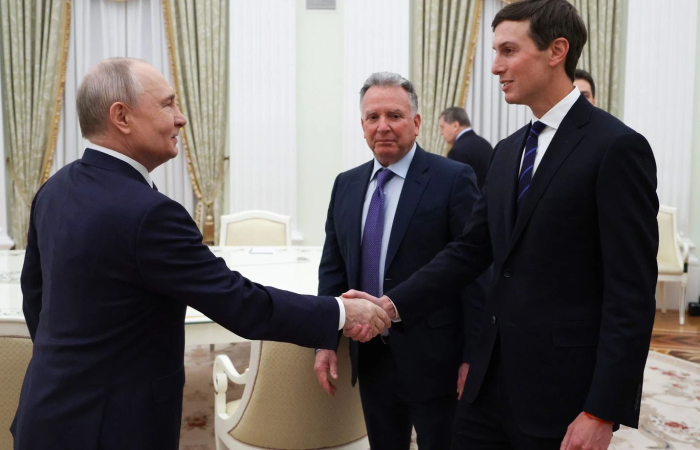
Ukraine and Russia could see European countries join the next round of peace negotiations, following talks between US special envoys Steve Witkoff and Jared Kushner and Russian President Vladimir Putin in Moscow on Thursday (November 12). However, conflicting positions over European military involvement, Ukraine’s territorial future and the continent’s security arrangements highlight the difficulties facing the diplomatic process. Speaking after the meeting, Witkoff said European participation would be an important development, describing the countries concerned as key partners. Kushner also indicated that Washington had noticed a shift in European attitudes and believed their involvement would not obstruct progress. In a statement published on X, he said the expanded discussions would address broader European security arrangements alongside territorial disputes between Russia and Ukraine. The US envoys subsequently travelled to Dublin, where they met Ukrainian President Volodymyr Zelenskyy during a European summit. Zelenskyy welcomed the possibility of European participation and expressed hope that the negotiations would include measures to reduce tensions and establish ceasefires. He also reiterated the importance of European representation in decisions concerning the continent’s security. Moscow, however, has offered a more cautious interpretation of the proposed expansion. Putin's aide, Yuri Ushakov, suggested that European countries should first reconsider their military assistance to Kyiv, arguing that their current actions demonstrated an unwillingness to pursue peace. Putin similarly called on Washington to work with its European allies to establish whether they genuinely wanted peace or continued confrontation with Russia. The Russian president also rejected the prospect of European peacekeeping troops being deployed to Ukraine following a potential agreement, describing such a presence as a continuation of the war. His position reflects wider disagreements over the future European security architecture, with Moscow seeking discussions on the continent's broader security arrangements, while European leaders insist that such negotiations cannot replace a settlement of the war. Simultaneously, Zelenskyy raised concerns about disruptions to Starshield, the US-made satellite communications service used by Ukrainian forces. He described Washington’s discussions with Moscow about Europe's future security as unusual and warned against decisions that could undermine Ukraine's sovereignty. Despite the diplomatic activity, fighting continued. Russian drone attacks killed two people in Ukraine's Sumy region and injured five in Rivne, while a separate attack in Russia's Belgorod region killed one person and injured four. Ukrainian agricultural company Kernel Holding also suspended operations at all its oilseed extraction facilities following repeated Russian attacks.

Popular

Editor's choice
Monday Commentary
Monday Commentary: European-Azerbaijan relations need an intensive and multifaceted dialogue that is frank and honest

Monday Commentary: European-Azerbaijan relations need an intensive and multifaceted dialogue that is frank and honest

Last week I visited Baku, Azerbaijan. My visit was relatively short, but very intensive, and had many meetings with stakeholders and colleagues. When I arrived in Baku first time in 1996,  Azerbaijan was a different country: weak, poor, and shaken by defeat in war. For thirty year the Karabakh issue dominated the agenda: the political agenda but also the popular mindset. Now, thirty years later, Azerbaijan has returned to Karabakh, and peace with Armenia is on the horizon. It is a new era for Armenia-Azerbaijan relations, for the South Caucasus, but also for Europe.  But we cannot be complacent: the Peace agreement has been initialed but not signed; borders remain closed; TRIPP is ambitious but remains an idea; and there are spoilers who want to turn the clock back. We must not allow them, and in this Europe and Azerbaijan must work together. Europe’ vanguard organization is the European Union – it is a free union of 27 member states; it is a strong global economic force, and increasingly a diplomatic and military force too. But it remains “work in progress” and can often appear dysfunctional. It often lacks collective and institutional memory. In its dealings with Azerbaijan the EU has made many mistakes – not least opening the delegation here late – in 2008. It sometimes appears condescending. Some utterances from the European Parliament and from some quarters in some member states are not understandable even for me. They irritate the Azerbaijanis, but serve no other purpose But Azerbaijan has also not handled relations with the EU well. It has failed to respond when the hand of friendship reached out; and it confused irritating actions, sometimes by well-meaning people; sometimes by outright spoilers, with strategic action. In short, EU-Azerbaijan relations have suffered from a lack of proper dialogue. This dialogue must be frank, honest and multi-faceted involving different segments of society on both sides.   Is Azerbaijan Europe? When Azerbaijan applied to join the Council of Europe in the 1990s, there were some who opposed, saying this was not Europe. I was one of the people who argued that Armenia and Azerbaijan may be on the periphery of the continent geographically, but were European in essence. Certainly their elites. During the discussion on 4 September in Baku, my friend Farhad Mammedov, mentioned that Azerbaijan is not interested in joining the EU, and was now close to the Central Asian countries in the 5 plus 1 format. Neither things mean that Azerbaijan is not Europe. There are several European countries that are not in the EU, and do not want to be, for example Norway and Switzerland. Iceland has recently voted to stay out of the EU. The UK was a member and left. Europe is bigger than the EU, and the holding of the European Political Community summit in Baku in 2027 proves that. Despite all the rhetoric, I never heard the president of Azerbaijan  saying that Azerbaijan is not Europe, nor have I heard any European president say it either. Not wanting to join the EU and forging close relations with neighbouring regions does not make Azerbaijan any less European. It is only logical that when Europeans talk to Azerbaijan they talk like family. The conversation is often frank. It must also be honest, and Europeans need always to remember this too. A frank, honest and multi-faceted dialogue A frank, honest and multifaceted dialogue will contribute to relations between Azerbaijan and the rest of Europe: it will avoid misperception, which unfortunately is very common on both sides; it will provide a forum where problems can be discussed and resolved, and it will increase mutual trust, so that together common problems can be addressed. (click image to read the full Monday Commentary)
Editor's choice
Monday Commentary
Monday Commentary: “The barren rocks of Aden” and “These lands of Yemen are so ruthless”

Monday Commentary: “The barren rocks of Aden” and “These lands of Yemen are so ruthless”

There are two early 20th-century tunes that mark foreign attempts to occupy and “pacify” Yemen. The Scottish tune “The barren rocks of Aden” marks the mobilisation of Highland soldiers, enlisted to be deployed to the Yemeni port of Aden, that in 1837 became the last colony to be incorporated into the British Empire. The tune talks of the harshness of the terrain, but is celebratory, It was even played as a farewell tune to Sir William Luce at the parade in Sharjah celebrating his end as “British Viceroy” in the Middle East in 1966. The second tune is an Anatolian lament. As Ilker Sezer reminded us this weekend, in his weekly feature on “Turkiye Today”, it “mourns the tragic fate of Ottoman soldiers dispatched to the harsh, remote deserts of Yemen during the fall of the empire, young men who marched away from their villages and never returned home. Most of their names, and numbers, were never recorded. Yet, their fate left a mark on the Turkish psyche.” Subsequent invaders have discovered that Yemen is a grave that cannot be overcome by the strength of modern technology, and that whilst Yemeni society is splintered and divided, building a reliable alliance with Yemeni factions is difficult. These are the harsh lessons facing Saudi Arabia, as the Kingdom faces its biggest challenge in its modern history. The leadership of the Kingdom now has to respond decisively. At stake is their very credibility. This is likely to be a long and messy conflict. Saudi military objectives need to be focused: to box in the Houthis rather than destroy them. This is likely to include: (a) regaining territory lost on the Red Sea coast; (b) control over Bab el Mandeb Strait; (c) some kind of cordon sanitaire on the Saudi-Yemeni border; and if things go well (d) the capture of Sanaa. All this would not eliminate the Houthi problem, but it will contain it. In the end the Saudis will have to continue managing Yemen with a mixture of carrot and stick. For the moment, the stick is likely, but the carrot cannot be forgotten either. (click the image to read the Monday Commentary in full)