


Анализ: Реконфигурация грузинской политики

Данная аналитическая статья была подготовлена редакцией Caucasus Concise

Как и предсказывалось, после прошедших парламентских выборов в октябре прошлого года начался серьезный процесс реконфигурации грузинской политики. Политический ландшафт меняется в соответствии с новыми реалиями как в стране, так и в мире, и это стоит оценивать положительно.

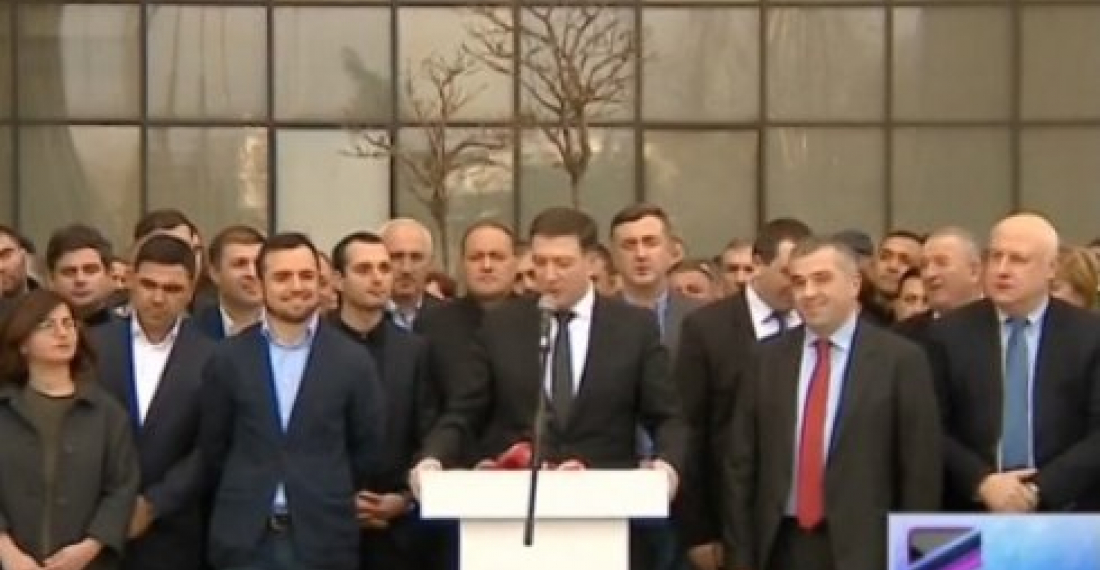
Основные изменения происходят внутри главной оппозиционной партии - Единое национальное движение (ЕНД). После недельного "разбора полетов" внутри партии, о которых стало известно СМИ, большинство ее членов-парламентариев покинули её для того, чтобы сформировать свое собственное политическое движение. Процесс был ускорен после того, как бывший мэр Тбилиси, Гиги Угулава, был освобожден из тюремного заключения в первые дни января. Он поддержал решение других партийных лидеров, таких как Гига Бокерия, Давида Бакрадзе и другие.

Бакрадзе, который является лидером оппозиции (формально называющееся меньшинством) в парламенте, представил видение будущего: "Мы, наша политическая команда смотрим вперед и начинаем строить будущее", - заявил Давид Бакрадзе, слова которого приводит civil.ge, в тоже время пожелав успеха тем членам партии, которые решили остаться в Едином национальном движении. "Мы, безусловно, остаемся союзниками в борьбе против режима Иванишвили, но с сегодняшнего дня эта политическая сила и эта политическая команда начинает новый этап борьбы, направленный на изменение ситуации в Грузии к лучшему, мирное завершение "Грузинской мечты" и режима Иванишвили и возвращение в страну развития и прогресса", - отметил он. Бакрадзе отметил, что в течение многих лет "лицом, позвоночником и опорой" ЕНД была команда, которая продолжит свою политическую деятельность по отдельности, используя свои "знания и компетентность" ... ", которая видит будущее Грузии в ЕС и НАТО, а также "главной задачей которой будет положить конец конфронтации в стране". Бакрадзе также добавил, что команда "смирилась с прошлым", и что "никто не будет бояться" их возвращения к власти. "Такая политическая сила создается сегодня и Я уверен, что эта политическая сила будет успешной на грузинской политической арене", заявил Бакрадзе, добавив, "неправильна любая оценка, что происходит выход команды, так как на самом деле, сегодня происходит разделение Национального движения".

Сильный, но примиренческий тон Бакрадзе контрастировал с языком, который бывший президент Михаил Саакашвили использовал как до, так и после выборов в октябре. Многие в Грузии приписывают победу Грузинской мечты к непринятию большинством грузин Саакашвили и его тактики. Однако, Саакашвили сохраняет поддержку среди некоторых основных групп внутри ЕНД, особенно в западной части Грузии. Кажется, у ЕНД также будет достаточное количество депутатов в парламенте, чтобы иметь возможность сформировать фракцию.

Изменения также происходят и в других оппозиционных партиях, которые не представлены в парламенте. Большинство ключевых фигур из Свободных демократов, в том числе ее лидер Ираклий Аласания ушли в отставку, а некоторым из них были даны посты в правительстве Грузинской мечты. Другим важным событием стала отставка бывшего спикера парламента Давида Усупашвили от Республиканской партии. Усупашвили до сих пор считался тяжеловесом в грузинской политике, и на этой неделе он объявил, что вместе с рядом единомышленников находится в процессе создания нового политического образования. Ходят слухи и относительно вступления президента Грузии Георгия Маргвелавшиви в это образование. Маргвелавшиви был избран президентом в 2013 году в качестве кандидата от Грузинской мечты, но разошелся с партией после того, как возникли разногласия между ним и основателем партии, Бидзиной Иванишвили. Усупашвили же исключил свое участие в следующих президентских выборах и заявил, что партия будет сосредоточено на парламентских выборах 2020 года.

Происходящие перемены среди оппозиции могут доставить временное довольствие и поддержку правлению Грузинской мечты, несмотря на то, что у нее большинство в парламенте и чувствует себя вполне уверенно в своем положении. Однако, такое положение дел может измениться. Многие наблюдатели считают, что новая политическая сила, которая выйдет из числа отделившихся от ЕНД станет сильной оппозицией правительству. Состоящая из опытных и способных политиков, и свободная от багажа в виде Саакашвили, у нее, скорее всего, будет возможность очень быстро построить мосты к грузинскому обществу. Новая партия во главе с Усупашвили также, вероятно, станет очень скоро важным игроком, привлекая либералов и интеллектуальный центр политического спектра. Но самый важный вызов для Грузинской мечты придет изнутри. Оставаться вместе, сплоченной и единой партией, которая в прошлом гордилась тем, что является широким политическим движением будет не легко, так как начнет сказываться бремя правления в сложных политических и экономических условиях.

Однако, в целом нынешние изменения в грузинской политике следует рассматривать положительно. Политический ландшафт меняется, чтобы отразить новые реалии как в стране, так и в мире. Большинство грузинских политических партий и политиков по-прежнему твердо привержены европейским и евро-атлантическим стремлениям Грузии, и текущие изменения, вероятно, скорее укрепят их, а не ослабят. Сильная и красноречивая оппозиция также имеет важное значение для здоровой демократии.

Данная аналитическая статья была подготовлена редакцией Caucasus Concise, еженедельный электронный бюллетень, и опубликована в сотрудничестве с Commonspace.eu

фото: Члены Единого Национального Движения в ходе объявления о разделении партии и создании нового политического образования, 12 января 2017 года.
Related articles

Editor's choice
News
Russia adds pressure on Armenia ahead of key elections; recalls Ambassador in Yerevan for consultations

Russia adds pressure on Armenia ahead of key elections; recalls Ambassador in Yerevan for consultations

Ahead of key parliamentary elections,scheduled to be held in Armenia on Sunday, 7 June, Russia continues to attempt to put pressure on the Armenian Government led by prime minister Nikol Pashinyan. On 30 May, Russia recalled its Ambassador to Yerevan for consultations. A terse statement, published on the website of the Russian Foreign Ministry, said, "The Ambassador of the Russian Federation to the Republic of Armenia , S.P. Kopyrkin, has been summoned to Moscow for consultations in connection with the steps taken by the Armenian leadership to move closer to the European Union, which are detrimental to cooperation within the EAEU." This followed a statement issued the day before, by the leaders of the Eurasian Economic Union (EAEU) that challenges the Armenian trajectory towards approximating to the European Union. Vladimir Putin is undertood to have personally pushed the other four EAEU leaders to issue the statement, which said: "Taking into account the significant risks to the economic security of the member states of the Eurasian Economic Union (hereinafter referred to as the Union) arising in connection with the preparation of the Republic of Armenia for accession to the European Union, as well as the need to prevent the associated damage to the member states of the Union: decided that the members of the Eurasian Intergovernmental Council from the Republic of Belarus, the Republic of Kazakhstan, the Kyrgyz Republic and the Russian Federation will report at the next meeting of the Supreme Eurasian Economic Council in December 2026 on the possible consequences of the suspension of the Treaty on the Eurasian Economic Union with respect to the Republic of Armenia. We share the position on the need to hold a national referendum in the Republic of Armenia as soon as possible on joining the European Union or continuing to be part of the Eurasian Economic Union."
Editor's choice
News
The leaders of the states of the Eurasian Economic Union issued a tough statement warning fellow-member state Armenia of the consequences of its desire to join the European Union.

The leaders of the states of the Eurasian Economic Union issued a tough statement warning fellow-member state Armenia of the consequences of its desire to join the European Union.

The leaders of the states of the Eurasian Economic Union (EEAS) issued a tough statement warning fellow-member state Armenia of the consequences of its desire to join the European Union. The stark, sharply worded,  warning, comes days before crucial parliamentary elections in Armenia, scheduled for 7 June. The full statement said, “We, the Presidents of the Republic of Belarus, the Republic of Kazakhstan, the Kyrgyz Republic and the Russian Federation, Taking into account the actions of the Republic of Armenia aimed at joining the European Union, including the approval in 2025 by the National Assembly of the Republic of Armenia and the signing by the President of the Republic of Armenia of the Law of the Republic of Armenia "On the Start of the Process of Accession of the Republic of Armenia to the European Union", as well as the confirmation by the European Union of the European aspirations of the Government of the Republic of Armenia, expressed in the joint declaration following the first Armenia-European Union summit, adopted on 5 May 2026, Taking into account the significant risks to the economic security of the member states of the Eurasian Economic Union (hereinafter referred to as the Union) arising in connection with the preparation of the Republic of Armenia for accession to the European Union, as well as the need to prevent the associated damage to the member states of the Union: decided that the members of the Eurasian Intergovernmental Council from the Republic of Belarus, the Republic of Kazakhstan, the Kyrgyz Republic and the Russian Federation will report at the next meeting of the Supreme Eurasian Economic Council in December 2026 on the possible consequences of the suspension of the Treaty on the Eurasian Economic Union with respect to the Republic of Armenia. We share the position on the need to hold a national referendum in the Republic of Armenia as soon as possible on joining the European Union or continuing to be part of the Eurasian Economic Union. Astana, May 29, 2026” A meeting of the Supreme Eurasian Economic Council was held in Astana, Kazakhstan, on May 29, 2026. The meeting of the Supreme Eurasian Economic Council in a restricted format was attended by Russian President Vladimir Putin, Belarusian President Alexander Lukashenko , Kazakh President Kassym-Jomart Tokayev , Kyrgyz President Sadyr Japarov , Armenian Deputy Prime Minister Mher Grigoryan, and Chairman of the Board of the Eurasian Economic Commission Bakytzhan Sagintayev. From the Russian side, the meeting was also attended by Deputy Prime Minister and member of the Council of the Eurasian Economic Commission Alexey Overchuk and Presidential Aide Yury Ushakov . The heads of delegations from EAEU observer states, including President of Uzbekistan Shavkat Mirziyoyev , Vice President of Cuba Salvador Valdés Mesa, Minister of Industry, Mines, and Trade of Iran Mohammad Atabak, and CIS Secretary General Sergei Lebedev, joined the expanded meeting . Following the meeting of the Supreme Eurasian Economic Council, a number of documents were signed .

Popular

Editor's choice
Interview
Thursday Interview: Murad Muradov

Thursday Interview: Murad Muradov

Today, commonspace.eu starts a new regular weekly series. THURSDAY INTERVIEW, conducted by Lauri Nikulainen, will host  persons who are thinkers, opinion shapers, and implementors in their countries and spheres. We start the series with an interview with Murad Muradov, a leading person in Azerbaijan's think tank community. He is also the first co-chair of the Action Committee for a new Armenian-Azerbaijani Dialogue. Last September he made history by being the first Azerbaijani civil society activist to visit Armenia after the 44 day war, and the start of the peace process. Speaking about this visit Murad Muradov said: "My experience was largely positive. My negative expectations luckily didn’t play out. The discussions were respectful, the panel format bringing together experts from Armenia, Azerbaijan, and Turkey was particularly valuable during the NATO Rose-Roth Seminar in Yerevan, and media coverage, while varied in tone, remained largely constructive. Some media outlets though attempted to represent me as more of a government mouthpiece than an independent expert, which was totally misleading.  Overall, I see these initiatives as important steps in rebuilding trust and normalising professional engagement. The fact that soon a larger Azerbaijani civil society visits to Armenia followed, reinforces the sense that this process is moving in the right direction." (click the image to read the interview in full)

