


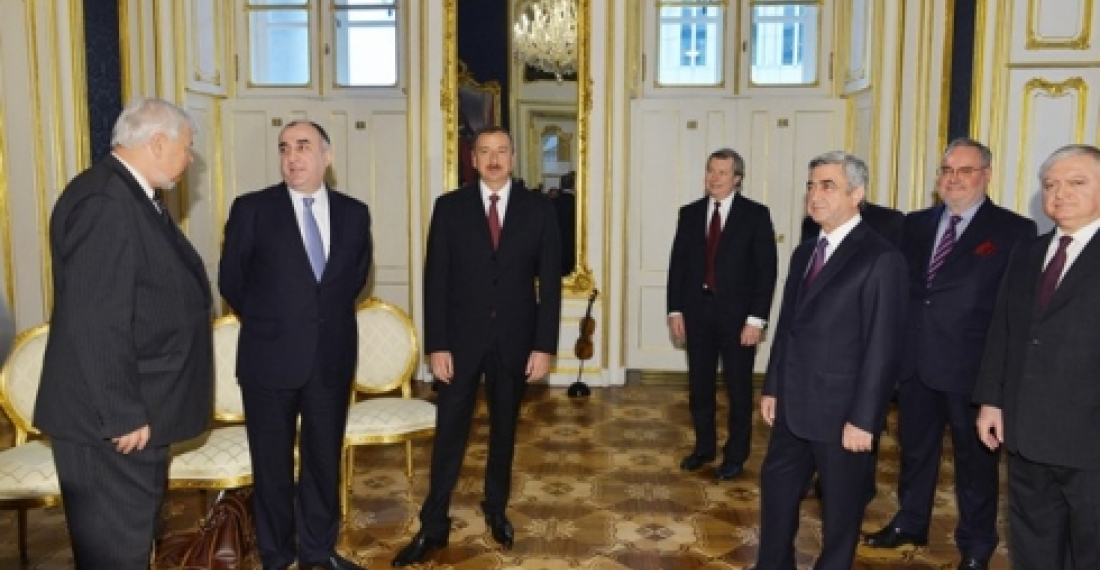
Алиев и Саргсян встретятся до конца этого года. Возможно!

По словам сопредседателя от США Минского процесса ОБСЕ, которому поручено содействовать переговорам по урегулированию конфликта вокруг Нагорного Карабаха посла Джеймса Уорлика, есть планы по организации встречи до конца этого года между президентом Армении Сержем Саргсяном и президентом Азербайджана Ильхамом Алиевым. Уорлик сообщил в обширном интервью для армянской службы Голоса Америки (VOA), что детали встречи нужно еще проработать, но он надеется, что президенты смогут встретиться до конца года.

Последняя встреча между двумя президентами состоялась в Вене, в ноябре 2013 года. После этого были и другие встречи на полях крупных международных мероприятий, но как считают наблюдатели, они были в значительной степени символическими. В своем интервью с VOA, посол Уорлик повторил свою обеспокоенность в связи с ухудшением ситуации на линии соприкосновения. По его словам, в то время, как раньше большинство нарушений режима прекращения огня были в результате снайперского огня, то в последние месяцы, они происходят с использованием минометов и артиллерии, в результате чего погибли ряд гражданских. Уорлик подчеркнул, чтобы достичь мирного соглашения должна быть проявлена политическая воля, но также подчеркнул, что мир принесет в регион новую эпоху процветания.

Посол Уорлик также подчеркнул, что сопредседатели Минской группы, которые включают в себя, помимо Соединенных Штатов, дипломатов от России и Франции, поддерживают идею мер доверия между сторонами. Он также подчеркнул, что, несмотря на проблемы в отношениях между США и Россией, сотрудничество в контексте Минской группы остаётся удовлетворительным.

Полный текст интервью посла Джеймса Уорлика армянской службе Голосу Америки (VOA) можно прочитать на сайте службы VOA здесь.

источник: commonspace.eu

Фото: Президент Алиев и Серж Саргсян с сопредседателями Минской группы перед встречей в Вене в 2013 г. (фото из архива).
 

Related articles

Editor's choice
News
The British prime minister says Europe must "stand on its own two feet" when it comes to defence

The British prime minister says Europe must "stand on its own two feet" when it comes to defence

The UK will deploy a carrier strike group, led by the aircraft carrier HMS Prince of Wales to the Arctic and the High North as part of efforts to bolster security against Russian threats. British prime minister, Sir Keir Starmer announced the deployment in a speech on Saturday (14 February) at the Munich Security Conference. Europe must be ready to fight to protect its people, values, and way of life,  Sir Keir told the Conference. Starmer also called for deeper links and cooperation, including economic ties, between the UK and EU. The PM stressed the continent must "stand on its own two feet" when it comes to defence commitments. "We must build our hard power, because that is the currency of the age," he told the conference. (Click image to read the full story).

Popular

Editor's choice
Interview
Thursday Interview: Murad Muradov

Thursday Interview: Murad Muradov

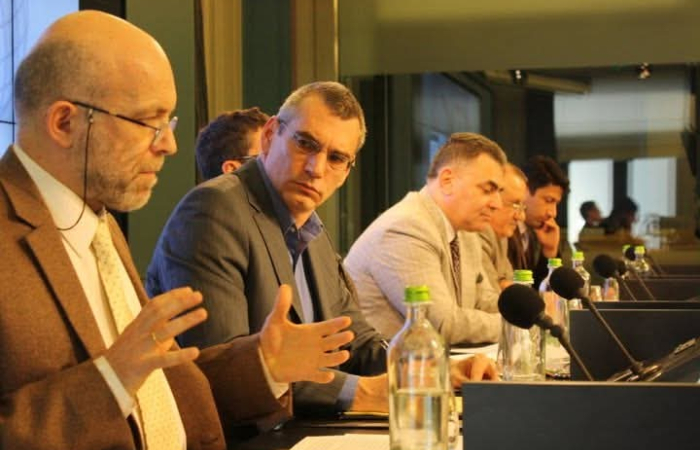
Today, commonspace.eu starts a new regular weekly series. THURSDAY INTERVIEW, conducted by Lauri Nikulainen, will host  persons who are thinkers, opinion shapers, and implementors in their countries and spheres. We start the series with an interview with Murad Muradov, a leading person in Azerbaijan's think tank community. He is also the first co-chair of the Action Committee for a new Armenian-Azerbaijani Dialogue. Last September he made history by being the first Azerbaijani civil society activist to visit Armenia after the 44 day war, and the start of the peace process. Speaking about this visit Murad Muradov said: "My experience was largely positive. My negative expectations luckily didn’t play out. The discussions were respectful, the panel format bringing together experts from Armenia, Azerbaijan, and Turkey was particularly valuable during the NATO Rose-Roth Seminar in Yerevan, and media coverage, while varied in tone, remained largely constructive. Some media outlets though attempted to represent me as more of a government mouthpiece than an independent expert, which was totally misleading.  Overall, I see these initiatives as important steps in rebuilding trust and normalising professional engagement. The fact that soon a larger Azerbaijani civil society visits to Armenia followed, reinforces the sense that this process is moving in the right direction." (click the image to read the interview in full)

