


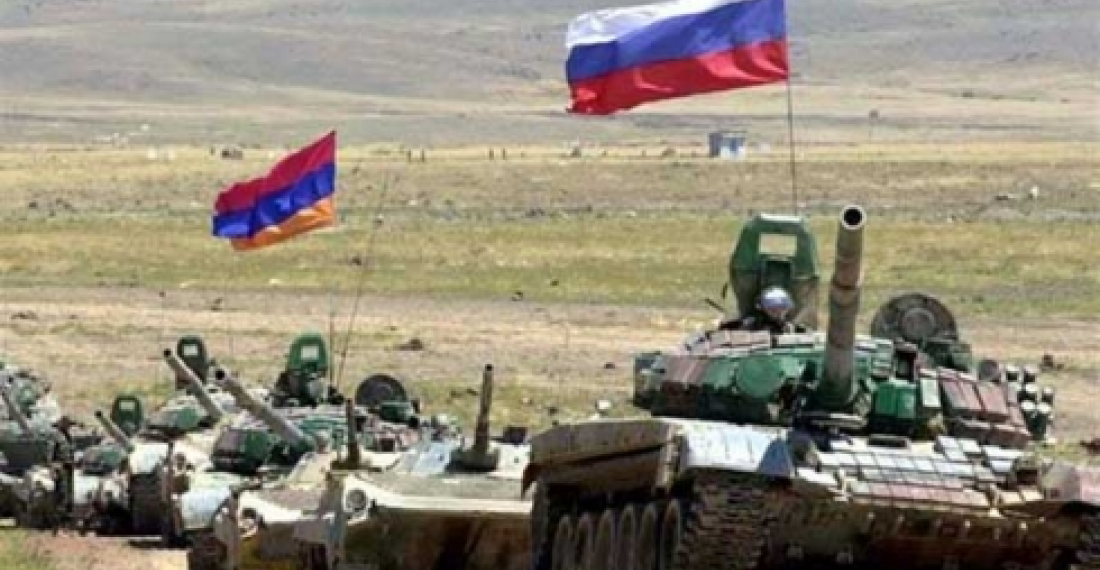
102-я российская военная база в Армении может оказать сопротивление США и Израилю в их атаке на Иран

Россия готовит адекватный удар на потенциальный удар США и Израиля по Ирану. Представитель России в ЕС Владимир Чизов предупредил на днях, что израильские или американские удары по Ирану приведут к "катастрофическим последствиям". Об этом пишет WPS.

Военные приготовления для минимизации ущерба от военных действий против Ирана начались в России больше года назад. К счастью, почти все уже сделано. Источники в министерстве обороны заявляют, что 102-я военная база в Армении была оптимизирована в октябре и ноябре 2011 года.

Семьи военнослужащих были доставлены в Россию, гарнизон, размещенный близ Еревана, сокращен и перенесен в Гюмри ближе к турецкой границе. Считается, что именно с территории Турции американцы могут нанести удар. Но какие именно задачи будут входить в решение 102-й базы на данный момент не совсем ясно. Российские войска в Южной Осетии и Абхазии были приведены в готовность с 1 декабря.

Надводные боевые корабли Черноморского флота находятся на станции, недалеко от берегов Грузии. Батарея Бал-Э береговой обороны ракетных комплексов (их диапазон составляет 130 километров) был приведен в боевую готовность в Избербаше (Дагестан), в непосредственной близости от границ Азербайджана. Все ракетные катера Каспийской флотилии были перенесены из Астрахани в Махачкалу и Каспийск. Известно, что они ракеты имеют дальность действия до 200 километров.

Корабли Северного флота под командованием флагмана адмирала Кузнецова, единственного в России авианосца, уже в пути к Средиземному морю. По крайней мере, флагман планируется сделать остановку в Тартусе (Сирия). Источники в Минобороне не подтвердили и не опровергли слухи о том, что атомная подводная лодка сопровождает группу судов в этой вылазке. Нет официальной информации о задачах армии и флота в случае войны в Иране. Создается впечатление, что Министерство обороны обеспокоено 102-й базой в Армении – оплотом России на Кавказе. Кремль явно опасается, что база может перестать быть геополитическим активом. Если американцы и их израильские союзники пойдут войной на Иран, эта потеря геополитического актива на Кавказе будет означать катастрофу для России.

В апреле этого года, Грузия аннулировала договор, который позволял Россия осуществлять военный транзит в Армению. Российско-армянские военные группы на Кавказе изолированы в этом месте. Топливо, продукты питания и все остальное, что потребуется российскому контингенту, должны будут быть переброшены по воздуху. Война в Иране сделает этот маршрут недоступным.

Ранее заместитель командующего Российской армии на Кавказе, генерал-лейтенант Юрий Неткачев сказал, что война в Иране вынудит Россию начать искать маршрут поставок для контингента в Армению через территорию Грузии. "Мы можем даже считать необходимым прорвать блокаду в Грузии и проложить транспортные коридоры, соединяющие нас и Армению", - сказал Неткачев.

Глава Центра политических прогнозов Анатолий Цыганок заявил, что "Россия крайне подозрительно и настороженно относится к Азербайджану в эти дни. Эта страна удвоила свой военный бюджет за последние три года, закупила беспилотные самолеты и другие виды современного оружия у Израиля. “Баку даже оказал на Россию дополнительное давление, настаивая на более высокой оплате за использование Габалинской РЛС. И все же, я бы не стал заходить так далеко, и предполагать, что Баку готовится поддержать военную кампанию против Ирана... Даже несмотря на споры между Ираном и Азербайджаном по поводу нефтяных месторождений в южной части Каспийского моря. Вряд ли также, что Азербайджан намерен воевать и против Армении", - отметил эксперт.

Военный эксперт полковник Владимир Попов не согласен с Цыганок. Попов является экспертом по армяно-азербайджанскому конфликту в 1991-1993 годах, он компетентен также в военной реформе, которые проводит президент Азербайджана Ильхам Алиев. Попов отметил: "Переговоры по разрешению конфликта в Нагорном Карабахе проходят слишком долго. Реваншистские заявления делаются в Баку открыто. Я считаю, что азербайджанцы могут нанести удар по Армении и Нагорному Карабаху в попытке вернуть территории". Эксперт отметил, что многое будет зависеть от поведения России.

"Если Азербайджан при поддержке Турции использует войну в Иране для своей «маленькой» войны в Армении, Россия и армянские зенитные силы обеспечит прикрытие с воздуха на территории всей Армении. В данный момент это не может рассматриваться как участие в боевых действиях. Российская армия не будет участвовать в военных действиях на территории Карабаха, об этом не может быть и речи. Тем не менее, российской армии, вероятно, придется бороться в самой Армении, когда войска сами будут находится под угрозой", - отметил полковник.

Фактически, Попов даже допустил возможность участия России в конфликте в Иране. "Если речь заходит о том, что... падения иранского режима стало неизбежным, Россия предложил свою военную помощь. По крайней мере, на военно-техническом уровне", - сказал Попов.


Related articles

Editor's choice
News
Israeli parliament votes to bring back the death penalty, but only for Palestinians

Israeli parliament votes to bring back the death penalty, but only for Palestinians

srael’s parliament approved a bill on Monday that would allow the execution of Palestinians convicted on terror charges for deadly attacks, a move that has been criticized as discriminatory and immediately drew a court challenge. Sixty-two lawmakers, including Prime Minister Benjamin Netanyahu, voted in favor and 48 against the bill, championed by far-right National Security Minister Itamar Ben Gvir. There was one abstention and the rest of the lawmakers were not present. Ben Gvir in the run-up to the vote had worn a lapel pin in the shape of a noose, symbolising his support for the legislation. “We made history!!! We promised. We delivered,” he posted on X after the vote. The bill would make the death penalty the default punishment for Palestinians in the Israeli-occupied West Bank found guilty of intentionally carrying out deadly attacks deemed “acts of terrorism” by an Israeli military court. The bill says that the sentence may be reduced to life imprisonment under “special circumstances.” Palestinians in the West Bank are automatically tried in Israeli military courts. Meanwhile, under the bill, in Israeli criminal courts anyone “who intentionally causes the death of a person with the aim of harming an Israeli citizen or resident out of an intention to put an end to the existence of the State of Israel shall be sentenced to death or life imprisonment.” Criminal courts try Israeli nationals, including Palestinian citizens and residents of east Jerusalem. The bill sets the execution method as hanging, adding that it should be carried out within 90 days of the sentencing, with a possible postponement of up to 180 days. - ‘Parallel tracks’ - The bill appears to conflict with Israel’s Basic Laws, which prohibit arbitrary discrimination, and shortly after it was passed, a leading human rights group announced that it had filed a petition with the Supreme Court demanding the legislation’s annulment. “The law creates two parallel tracks, both designed to apply to Palestinians,” the Association for Civil Rights in Israel said in a statement. “In military courts — which have jurisdiction over West Bank Palestinians — it establishes a near-mandatory death sentence,” the rights group said. In civilian courts, the law’s stipulation that defendants must have acted “with the aim of negating the existence” of Israel “structurally excludes Jewish perpetrators,” the group added. The association argued the law should be annulled on both jurisdictional and constitutional grounds. During the debate in parliament, opposition lawmaker and former deputy Mossad director, Ram Ben Barak, expressed outrage at the legislation. “Do you understand what it means that there is one law for Arabs in Judea and Samaria, and a different law for the general public for which the State of Israel is responsible?” he asked fellow parliamentarians, using the Israeli name for the West Bank. “It says that Hamas has defeated us. It has defeated us because we have lost all our values.” - ‘Discriminatory application’ - Lawmaker Limor Son Har-Melech from Ben Gvir’s party, who years ago survived an attack by Palestinian militants in which her husband was killed, urged fellow parliamentarians to approve the bill. “For years, we endured a cruel cycle of terror, imprisonment, release in reckless deals, and the return of these human monsters to murder Jews again ... And today, my friends, this cycle has come full circle.” The Palestinian Authority condemned the law’s adoption, saying that “Israel has no sovereignty over Palestinian land.” “This law once again reveals the nature of the Israeli colonial system, which seeks to legitimize extrajudicial killing under legislative cover,” it added. In February, Amnesty International had urged Israeli lawmakers to reject the legislation, citing its “discriminatory application against Palestinians.” On Sunday, Britain, France, Germany and Italy expressed “deep concern” over the bill, which they said risked “undermining Israel’s commitments with regards to democratic principles.” While the death penalty exists for a small number of crimes in Israel, it has become a de facto abolitionist country — the Nazi Holocaust perpetrator Adolf Eichmann was the last person to be executed in 1962. Israel has occupied the West Bank since 1967 and violence there has soared since Hamas’s October 7, 2023 attack on Israel triggered the Gaza war. (read more by clicking the image above).

Popular

Editor's choice
Interview
Thursday Interview: Murad Muradov

Thursday Interview: Murad Muradov

Today, commonspace.eu starts a new regular weekly series. THURSDAY INTERVIEW, conducted by Lauri Nikulainen, will host  persons who are thinkers, opinion shapers, and implementors in their countries and spheres. We start the series with an interview with Murad Muradov, a leading person in Azerbaijan's think tank community. He is also the first co-chair of the Action Committee for a new Armenian-Azerbaijani Dialogue. Last September he made history by being the first Azerbaijani civil society activist to visit Armenia after the 44 day war, and the start of the peace process. Speaking about this visit Murad Muradov said: "My experience was largely positive. My negative expectations luckily didn’t play out. The discussions were respectful, the panel format bringing together experts from Armenia, Azerbaijan, and Turkey was particularly valuable during the NATO Rose-Roth Seminar in Yerevan, and media coverage, while varied in tone, remained largely constructive. Some media outlets though attempted to represent me as more of a government mouthpiece than an independent expert, which was totally misleading.  Overall, I see these initiatives as important steps in rebuilding trust and normalising professional engagement. The fact that soon a larger Azerbaijani civil society visits to Armenia followed, reinforces the sense that this process is moving in the right direction." (click the image to read the interview in full)

